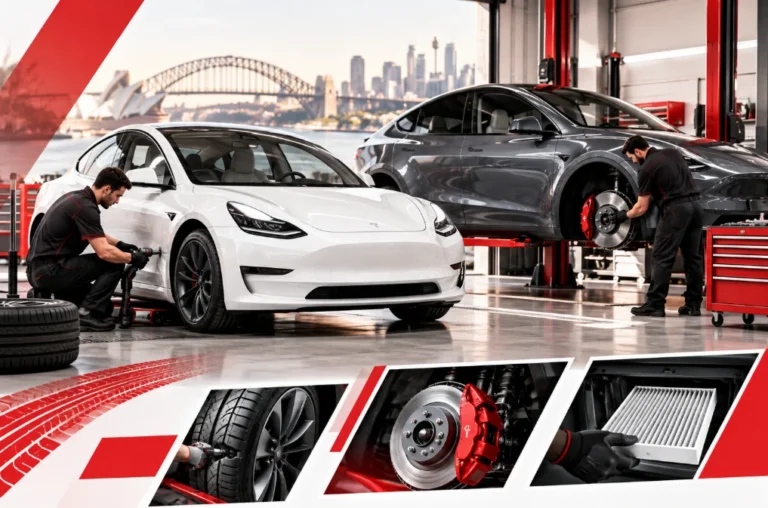
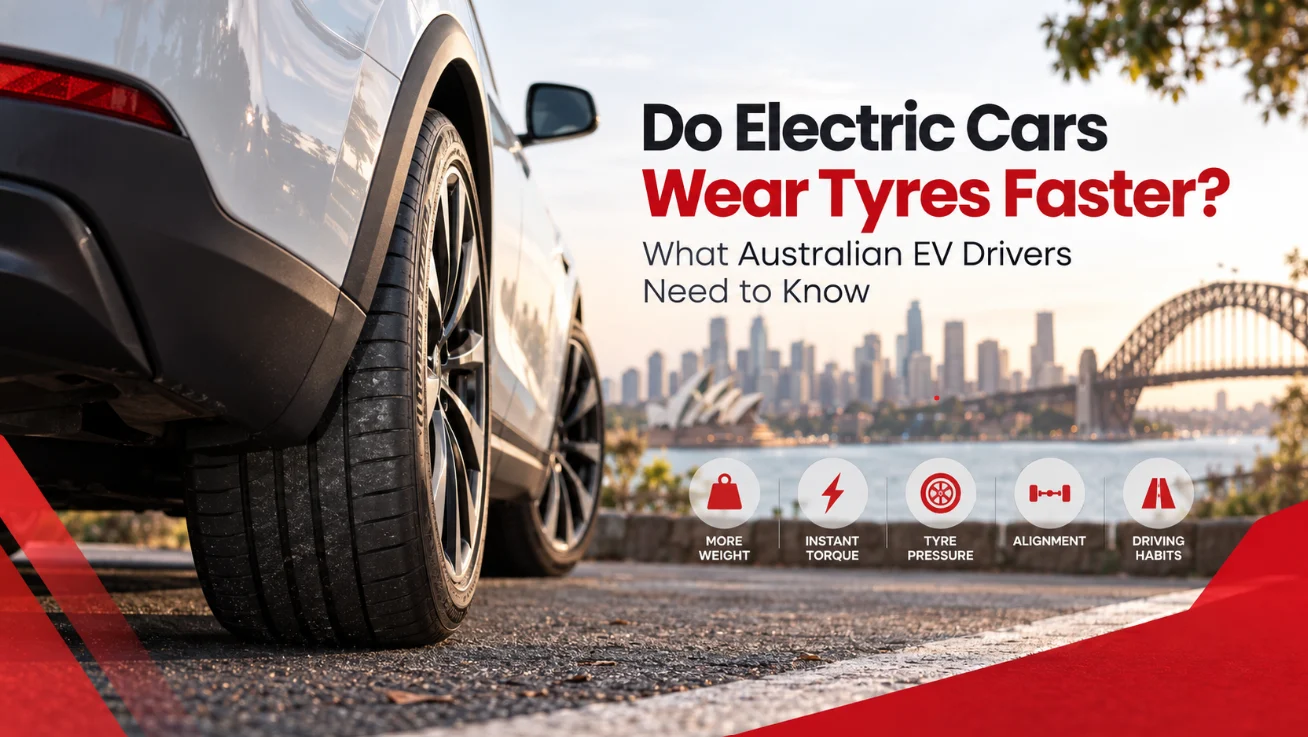
EV tyres can wear faster or unevenly when vehicle weight, instant torque, pressure, alignment and driving habits work against them. Here is what Australian EV owners, especially Sydney drivers, should check before replacing another set.
One of the nicer things about owning an electric car is that you have fewer routine engine service items to worry about. The four patches of rubber on the road still do a lot of work, though. If your EV tyres are wearing sooner than expected, wearing unevenly, or getting noisier, it is not just because electric cars are hard on tyres. Vehicle weight, torque, pressure, wheel alignment, tyre specification, road conditions and driving style all play a part.
Yes, some EVs can place greater demands on their tyres, but fast wear is not inevitable.
Many electric vehicles are relatively heavy and can deliver strong torque from low speed. Those traits can increase tyre load and wear, especially when pressure is low, alignment is out, acceleration is aggressive, or the replacement tyre is not right for the vehicle. The best first step is to look at the wear pattern before blaming the powertrain.
Why can electric cars wear tyres differently?
There is no single rule that says an electric car will use up a set of tyres after a certain number of kilometres. Two owners of the same model can see very different tyre life. What matters is how several forces meet at the tyre.
Vehicle weight
Some EVs are heavier than comparable petrol cars because of the battery pack. Higher vehicle load means each tyre has more work to do during acceleration, cornering and braking. That makes the correct tyre size and load rating especially important.
Instant torque
Electric motors can deliver strong torque straight away. Smooth acceleration is fine, but repeated hard launches ask a lot from the tread, especially on a powerful EV. How you use the accelerator can affect tyre life more than many owners expect.
Pressure
A tyre that sits below the manufacturer’s recommended pressure flexes and heats more than it should. It can also wear unevenly. Use the pressure specified for your vehicle, not a generic figure taken from another EV.
Wheel alignment
Alignment can quietly shorten tyre life. The car may still feel reasonably normal while one edge of the tread is being scrubbed away. A pothole hit, kerb strike or worn suspension part can all throw the alignment out.
The Australian Government’s current EV maintenance guidance makes the same point. It highlights vehicle weight, road conditions, instant torque, tyre pressure, tread checks and rotation as key parts of EV tyre care.
Not every electric car destroys tyres
You will often hear claims that EV tyres wear a fixed percentage faster than tyres on petrol cars. That sounds neat, but it is too simple to apply to every vehicle. Tyre compound, wheel size, vehicle mass, suspension geometry, road surface, temperature, tyre pressure, rotation pattern and how the car is driven all change the result.
A gently driven EV on suitable tyres with correct pressure and alignment can deliver perfectly reasonable tyre life. A powerful EV driven hard on large performance tyres may not. The same pattern shows up on many high-performance petrol cars.
That is why Servistar treats tyre wear as a pattern to understand, not a verdict on the car. If the wear looks unusual, find the reason first. Fitting new tyres without fixing an alignment or suspension issue can put the next set on the same path.
Your tyre wear pattern can tell you what to check next
You do not need to diagnose the car yourself, but a quick look across the tread can give you a useful clue before you speak with a workshop. Check all four tyres, not just the one that is easiest to see.
Both shoulders
Can be linked to running below the recommended pressure, although load and driving conditions also matter.
One edge
Often points to an alignment and suspension check, especially if the car also pulls or the steering wheel sits off centre.
Centre wear
Pressure should be checked against the vehicle placard and manufacturer guidance. Do not guess the correct setting from appearance alone.
Patchy or scalloped
May justify checking wheel balance, dampers, suspension movement, tyre condition and other rotating components.
| What you notice | What it may suggest | What to tell the workshop |
|---|---|---|
| Inner or outer edge wearing first | Alignment, suspension condition, pressure or the way the vehicle is being used may need attention. | Which tyre is affected, which edge is wearing, and whether the car pulls to one side. |
| Steering wheel vibration at road speed | Wheel balance, tyre damage, wheel condition, alignment or suspension can be involved. | The speed where the vibration begins and whether it changes during braking or acceleration. |
| Tyre pressure keeps dropping | A puncture, valve problem, wheel sealing issue or tyre damage may be present. | How often you need to add air and whether the loss is happening on one tyre or several. |
| Rapid wear across all four tyres | Driving style, tyre compound, pressure, load and vehicle characteristics may all be contributing. | Tyre brand and model, kilometres fitted, usual pressure, driving pattern and whether rotation has been carried out. |
If vibration is the main symptom rather than visible tyre wear, Servistar’s guide to car shaking at high speed explains how wheel balance, tyres, alignment, suspension and other components can produce a similar feeling.
Do electric cars need special tyres?
Not every EV needs a tyre with an EV marketing label. What matters first is that the replacement tyre meets the manufacturer’s requirements for size, load capacity, speed rating and any other specification listed for that model.
Some tyres are designed or tuned with electric vehicles in mind. They may focus on higher load capacity, lower rolling resistance, reduced road noise, durability or a mix of those traits. That can be useful, but the words “EV tyre” on their own do not confirm that a tyre is right for your car.
Rolling resistance also deserves attention. A tyre is part of the energy equation on an electric car, so changing tyre type, size or pressure can affect efficiency and driving range. The aim is not to chase the lowest possible rolling resistance at the expense of the manufacturer’s safety and load requirements. Use a correctly specified tyre and keep it in good condition.
What Sydney EV drivers should pay attention to
Sydney driving can put several very different kinds of use into the same week. A car might spend weekdays in slow urban traffic, then cover motorway kilometres on the weekend. Add potholes, speed humps, tight parking, kerbs and hot road surfaces, and tyres can see a wide mix of loads.
A pothole does not need to cause an immediate flat tyre to matter.
A hard impact can damage a tyre or wheel, and it can also be followed by a change in steering feel or alignment. If your EV starts pulling, the steering wheel is no longer centred, or one tyre begins wearing differently after an impact, that is useful information to give the workshop.
Frequent urban acceleration can matter too. Instant torque is one of the enjoyable parts of driving an EV, but repeatedly using all of it from a standstill can increase tread stress. Smoother acceleration is easier on the tyres and often better for energy use as well.
If you are trying to understand the wider ownership picture, including charging, servicing and tyre costs, read Servistar’s comparison of petrol, hybrid and EV running costs in Australia.
How to help your EV tyres last longer
There is no special product that makes an unsuitable or badly aligned tyre last. The useful habits are much simpler.
- Use the vehicle’s recommended tyre pressure. Check the placard or owner’s manual and measure pressure regularly, particularly before longer trips or when carrying heavier loads.
- Look across the whole tread. Do not judge tyre condition only from the outer shoulder that is easiest to see. Inner edge wear can hide until it becomes advanced.
- Follow the manufacturer’s rotation guidance. Rotation can help even out wear where the vehicle and tyre setup allows it. Some staggered wheel setups have restrictions, so check the correct procedure for your model.
- Pay attention after pothole or kerb impacts. A new steering pull, vibration or off-centre steering wheel deserves a closer look.
- Accelerate progressively when you do not need full power. Strong EV torque is useful, but using it hard at every opportunity can increase tyre stress.
- Choose replacement tyres by specification, not just price. Size, load capacity, speed rating and manufacturer requirements come first.
- Do not ignore suspension wear. A worn bush, joint or damper can affect how the tyre meets the road and contribute to irregular wear.
NSW roadworthy minimum
NSW Government guidance says tyres must have at least 1.5 mm of tread depth, be inflated to the recommended pressure, and must not have cracks, bumps or uneven wear.
Do not use the legal minimum as your maintenance target
The condition of a tyre affects wet grip, braking and stability well before it becomes obviously bald. Inspect tyres regularly and act earlier if you see damage, uneven wear or a clear loss of tread.
You can read the current NSW Government roadworthiness guidance for the state requirements.
When should an EV owner book a tyre or suspension inspection?
Normal, even tread wear is very different from a sudden change. If you notice one of the signs below, an inspection can help work out whether the problem sits in the tyre itself or somewhere else around the wheel and suspension.
| Sign | Why it matters |
|---|---|
| The car pulls left or right | Tyre pressure, alignment, tyre condition, steering or suspension may need checking. |
| The steering wheel vibrates | Wheel balance, tyre or wheel damage, suspension and other rotating components can be involved. |
| One tyre edge is disappearing faster | Replacing the tyre alone may not solve the reason it is wearing unevenly. |
| You find a bulge, crack, cut or exposed material | Visible tyre damage can become a safety issue and should be professionally assessed promptly. |
| Pressure repeatedly falls on one tyre | A puncture, valve leak, wheel issue or tyre damage may be present. |
| Wear changed after a pothole impact | The impact may have affected the tyre, wheel, alignment or suspension. |
If you are buying rather than already owning an electric car, tyre condition also deserves a place in the pre-purchase inspection. Servistar’s used EV buying guide for Sydney covers battery health, charging, underbody condition, tyres, brakes and suspension together, which gives a much clearer picture than judging the battery alone.
Useful Servistar guides to read next
Find the cause before the next set wears the same way.
Tell Servistar what you are seeing, such as edge wear, steering pull, vibration or repeated pressure loss. You can then explore service options and connect with local workshops that can inspect the tyres, wheels, alignment, steering and suspension as needed.
Start a service requestEV tyre wear FAQ
Do EVs wear tyres faster than petrol cars?
They can, but it is not guaranteed. Some EVs carry more weight and deliver stronger low-speed torque than comparable petrol cars, which can increase tyre demands. Tyre choice, pressure, alignment, driving style, suspension condition and road use can make just as much difference to the final tyre life.
How long should tyres last on an electric car?
There is no reliable kilometre figure that applies to every EV. A touring tyre on a gently driven family EV can behave very differently from a performance tyre on a powerful model. Use tread condition, wear pattern, tyre age, manufacturer guidance and professional inspection rather than a single universal mileage target.
Do I have to buy special EV tyres?
Not necessarily. The replacement tyre must meet the specifications required for the vehicle, including the correct size, load capacity and speed rating. Some tyres are designed to address EV priorities such as load, noise, efficiency and durability, but an EV label by itself does not prove suitability for your exact car.
Does tyre pressure affect EV range?
It can. Tyres contribute to rolling resistance, so running at an unsuitable pressure may increase energy use as well as affecting wear and handling. Use the pressure recommended by the vehicle manufacturer and adjust for load only where the manufacturer provides a different setting.
How do I know if my EV needs a wheel alignment?
Common clues include uneven edge wear, a steering wheel that no longer sits straight, the car pulling to one side, or a noticeable change after hitting a pothole or kerb. These clues do not prove alignment is the only issue, so tyre and suspension condition should be checked at the same time where appropriate.
What is the minimum legal tyre tread depth in NSW?
NSW Government roadworthiness guidance states that tyres must have at least 1.5 mm of tread depth. They also need to be in good condition, inflated to the recommended pressure, and free from cracks, bumps and uneven wear.
This guide provides general vehicle care information. Always follow the tyre placard, owner’s manual and manufacturer requirements for your exact model. For current Australian EV maintenance guidance, see energy.gov.au. For NSW roadworthiness requirements, see NSW Government.