

Ask two different workshops in Sydney for a logbook service quote and you’ll often get two very different prices. One might come in under $300, while the other hits $500 or more. But that doesn’t always mean one is overcharging you. Usually, the quotes are just covering different levels of work.
So, what is a fair logbook service cost in Sydney?
For a routine service on a common passenger car, $250 to $500 is a realistic starting range. Major service intervals, diesel engines, four-wheel drives, utes, and European or luxury vehicles can push the price higher. The useful question isn’t simply “Which quote is cheaper?” It’s “What is actually included?”
Quick answer
Current Australian price guides place a typical logbook service at around $370 to $385. NSW averages across all service types sit at about $365. Use those figures as a helpful benchmark, not a fixed Sydney price.
What should you expect to pay?
There’s no official flat rate for logbook servicing in Sydney. These numbers are best used as a budgeting guide before you ask for a proper itemised quote.
| Service type | Indicative cost | What can change the price |
|---|---|---|
| Routine service on a common passenger car | $250–$500 | Vehicle, service interval, oil, filters and labour |
| Typical Australian logbook-service benchmark | $370–$385 | National consumer price-guide estimate |
| Major service, diesel, 4WD or ute | Often above $500 | Extra fluids, filters, parts and labour |
| European, luxury or performance vehicle | Can be considerably higher | Specialist parts, fluids and workshop expertise |
Price references: Canstar and the Yellow Pages car service cost guide. Actual quotes vary by vehicle and scheduled interval.
A common mistake: comparing two headline prices before checking what’s actually included.
A $299 quote might cover just oil, an oil filter and basic checks. A $479 quote could also include a cabin filter, brake fluid, spark plugs or other items that are due at that particular service interval. Until you see the full breakdown, you’re not really comparing apples with apples.
What is a logbook service?
A logbook service is the scheduled maintenance your vehicle manufacturer recommends. The timing is usually based on months, kilometres travelled, or whichever comes first.
The work changes depending on the interval. A routine visit can be fairly straightforward. A 60,000 km or 100,000 km service often involves additional filters, fluids, spark plugs and more thorough inspections.
A routine interval may include
- Engine oil and oil filter replacement
- Fluid checks
- Brake, tyre and suspension inspections
- Battery and charging-system checks
- Lights and general safety checks
- An updated service record
A larger interval may also include
- Spark plug replacement
- Air, cabin or fuel filters
- Brake fluid or coolant replacement
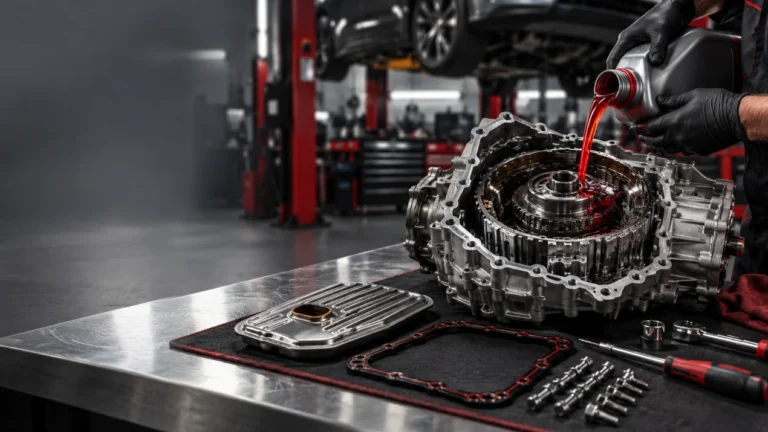
- Transmission fluid servicing
- Belt and hose inspections
- Additional diagnostic checks
This is exactly why most workshops will ask for your registration, make, model, odometer reading and service history before they can give you an accurate quote.
Why do prices vary so much?
1. The service interval
A smaller scheduled service might mainly involve oil, a filter and inspections. A major interval can require several replacement parts and fluids.
2. The vehicle
A common petrol hatchback is usually simple to service. A diesel ute, four-wheel drive, European model or performance car can need more oil, pricier filters or extra labour time.
3. Parts and fluid specifications
Modern engines are often quite specific about the exact oil grade and fluid types they need. A proper quote should allow for products that meet the manufacturer’s requirements.
4. Labour time
Some service items are quick and easy to reach. Others are tucked away behind covers or other components that take time to access. That extra time shows up in the labour charge.
5. Dealer or independent workshop
Dealerships generally have higher labour rates and tend to use manufacturer-branded parts. Independent workshops can often offer more competitive pricing while still sticking to the correct logbook schedule.
6. Additional repairs
Scheduled servicing doesn’t automatically include every fault the mechanic finds on the day. Worn brake pads, damaged tyres, a weak battery or a fluid leak will usually be quoted separately.
A good workshop will always explain the issue, give you a price and get your approval before doing any work outside the original booking.
What should a fair quote include?
Will an independent service void your warranty?
No—not simply because you used an independent workshop.
Australian drivers don’t have to use a dealership to keep their standard new-car warranty or consumer guarantees intact. The service just needs to be done by a suitably qualified technician, following the manufacturer’s schedule, with the right parts and fluids.
An independent repairer can also stamp or update the service record when those conditions are met. The Australian Automotive Aftermarket Association has a clear explanation of your rights here.
Separately purchased extended warranties can sometimes have extra conditions, so it’s worth checking the fine print if you have one.
Dealer or independent workshop?
| What to compare | Dealership | Independent workshop |
|---|---|---|
| Typical pricing | Often higher | Often more competitive |
| Vehicle knowledge | Focused on the manufacturer’s range | Depends on the workshop’s experience |
| Parts | Often manufacturer-branded | Genuine or suitable equivalents |
| Convenience | Limited to dealer locations | More local or mobile options may be available |
| Warranty-compliant servicing | Yes | Yes, when requirements are followed |
A dealership makes sense if you prefer a manufacturer-branded service history or a capped-price program. An independent workshop often suits drivers who want more local options, better communication or a sharper price.
Neither choice is automatically better. The real value comes from getting the right work done properly, with everything clearly explained upfront.
Red flags before you book
- The quote does not identify the scheduled service interval
- It only says “full service” without listing the work
- It does not say whether GST is included
- There is no detail about oil, filters or scheduled parts
- It does not mention updating the service record
- Extra repairs can be added without your approval
- It is dramatically cheaper than other quotes without explaining why
You don’t need to pick the most expensive workshop. You just need enough information to know exactly what you’re paying for.
How Servistar helps
Calling around to workshop after workshop and repeating your vehicle details every time gets tiring fast. It’s also hard to compare prices when every place describes their service a bit differently.
Servistar makes things easier by letting you enter your vehicle and location details once, then browse available mechanics and workshops, compare options and book online.
That gives you a much clearer starting point when comparing location, availability, convenience and the actual work required.
Compare logbook service options in Sydney
Enter your vehicle details, review available options and book your next service through Servistar.
Get a Logbook Service QuoteFrequently asked questions
How much should a standard logbook service cost in Sydney?
Why is my quote more than $500?
Is a logbook service just an oil change?
Can an independent mechanic stamp my logbook?
Will independent servicing void my new-car warranty?
What is capped-price servicing?
Are unexpected repairs included in the original quote?
How often does my car need a logbook service?
Final word
For many common cars, a routine logbook service in Sydney will land somewhere around the $250 to $500 mark. But there’s no single fair price that fits every vehicle.
The specific interval, engine type, parts, fluids and labour all play a part in the final cost. Before you book, ask for an itemised quote and double-check that it covers exactly what your car is due for.
That one step makes it much easier to spot genuine value — and much harder to fall for a cheap quote that skips important work.
For more practical car-care advice, visit the Servistar blog.