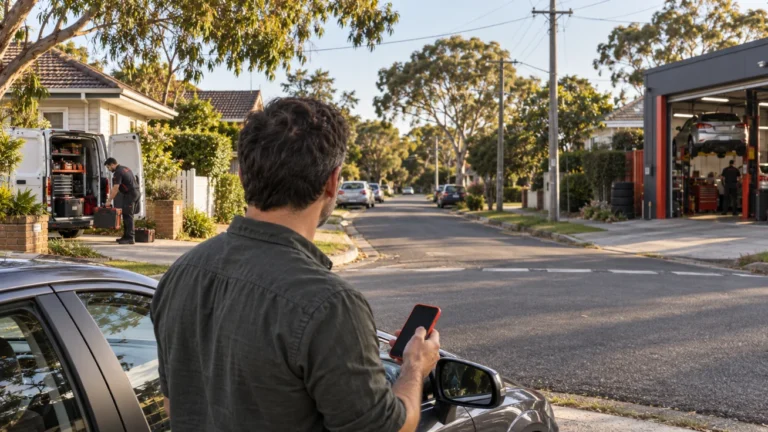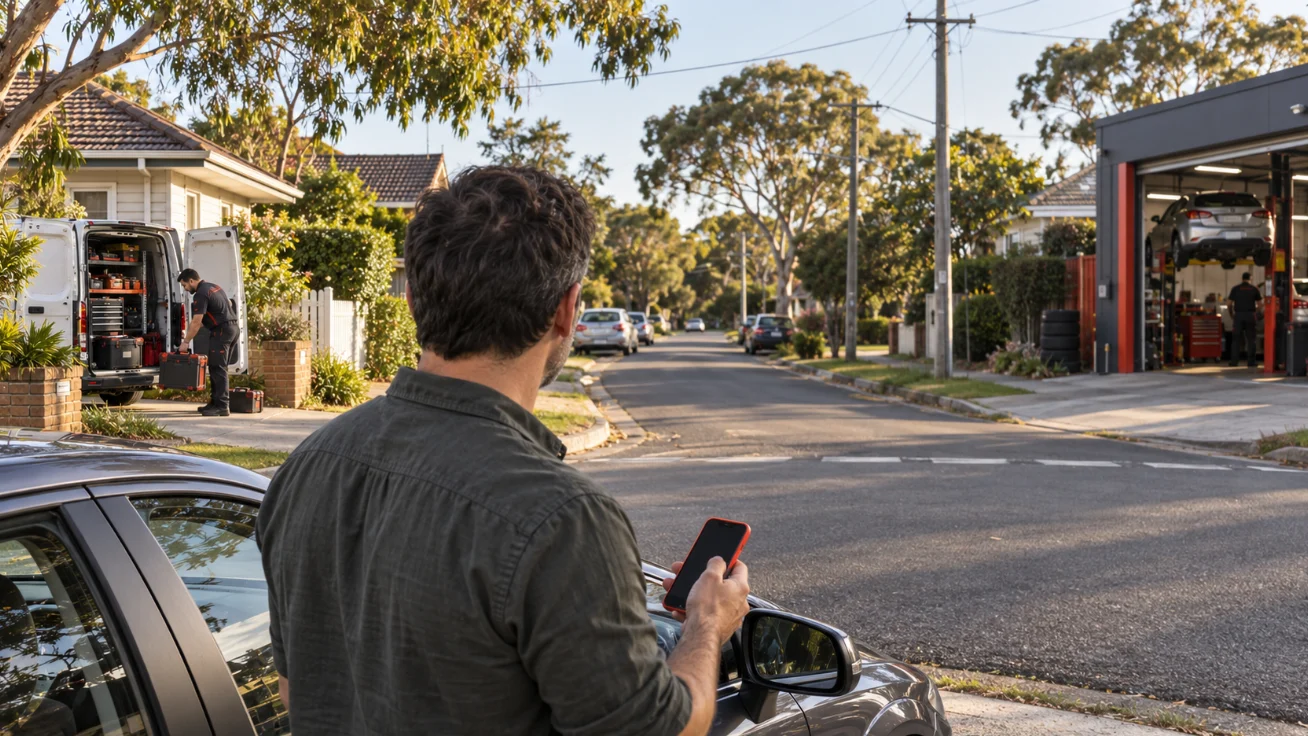
Not sure whether to call a mobile mechanic or book a workshop? Learn which Sydney car repairs suit mobile service, which jobs require specialist workshop equipment, and how to choose the safest option for your car.
The right place for a repair depends on the job, not the label
A mobile mechanic can save you a trip across Sydney and might be exactly what you need when the car is sitting in your driveway. A workshop has the fixed equipment, controlled space and lifting capacity needed for other repairs. The useful question is not which option always wins. It is which one fits your vehicle, your location and the work that needs to be done.
Mobile mechanic and workshop services solve different problems
It is easy to treat this as a contest between convenience and capability. In real life, the distinction is more practical. A mobile mechanic brings suitable tools and diagnostic equipment to the vehicle. A workshop brings the vehicle into a space built around fixed equipment, parts access and more complex work.
Neither setting is automatically more professional. The quality of the result depends on the technician, the diagnosis, the equipment required, the working conditions and whether the repair is appropriate for that location.
A mobile mechanic may suit you when
- The car will not start and is already at home or work.
- You need routine servicing that can be completed safely on site.
- A battery, starter circuit or basic electrical problem needs testing.
- You want a pre purchase inspection at the seller’s location.
- Taking time away from work or arranging another car would be difficult.
A workshop may suit you when
- The repair needs a vehicle hoist or extensive access underneath.
- The job requires wheel alignment, tyre fitting or fixed test equipment.
- Major engine, transmission or clutch work is expected.
- The vehicle needs secure overnight storage or extended diagnosis.
- Your parking area is unsafe, restricted, exposed or unsuitable for repairs.
Which common car jobs suit each option?
The table below is a starting point, not a promise that every provider offers every service. Vehicle design and the exact fault can move the same job from one column to the other. A straightforward brake inspection may be possible on site, for example, while a seized component or a larger repair may need workshop equipment.
| Job or situation | Likely best starting point | Why |
|---|---|---|
| Battery test or replacement | Mobile mechanic | The car may not be driveable, and testing can often be completed where it is parked. |
| Routine logbook service | Either option | It depends on the service schedule, vehicle access, provider capability and the work due. |
| Warning light or starting fault | Mobile diagnosis may be a useful first step | Initial testing can narrow the fault before towing or replacing parts. |
| Wheel alignment or tyre fitting | Workshop | These jobs normally require fixed specialist machinery. |
| Air conditioning regas or leak repair | Workshop or equipped specialist | Refrigerant work requires suitable licensed handling and dedicated equipment. |
| Clutch or transmission repair | Workshop | Safe lifting, heavy component handling and substantial dismantling may be required. |
| Pre purchase inspection | Mobile mechanic or inspection provider | The vehicle can be assessed at the seller’s location, subject to safe access and inspection scope. |
| Unclear noise while driving | Either option after a symptom review | The correct setting depends on whether road testing, lifting or extended diagnosis is needed. |
Three questions decide more than the service label
Can the car be driven safely?
If the vehicle will not start, is overheating, has a serious brake concern or shows another unsafe symptom, do not drive it merely to avoid a call out. A mobile assessment or towing advice may be the safer first step.
What equipment is required?
A diagnostic scan tool can travel. A wheel alignment machine cannot. Ask whether the expected repair needs fixed machinery, prolonged lifting or specialist testing before deciding where the work should happen.
Is the location suitable?
A flat private driveway can be workable. A busy street, steep slope, low basement or shared apartment area may not be. Safe access matters more than convenience.
Sydney parking can change the answer
In Sydney, the vehicle location is not a small detail. Apartment basements may have low clearance, limited lighting, poor ventilation or rules against vehicle repairs on common property. Street parking can expose a technician to traffic and leave too little space to work safely. Some addresses also have access limits, loading restrictions or paid parking.
When requesting mobile service, give the provider a useful picture of the location. Mention whether the car is on a level driveway, inside a basement, parked on the street or unable to move from a tight space. If you can, include the clearance height and any building access instructions.
Tell the mechanic this before the appointment
Your suburb, vehicle make and model, registration or vehicle details, exact symptoms, warning lights, whether the engine starts, where the car is parked and whether the site is level and accessible. Clear information helps the provider bring suitable equipment and identify when a workshop is the better destination.
Is a mobile mechanic cheaper than a workshop?
Sometimes, but not automatically. A mobile service may save towing, travel and time away from work. It may also include an attendance charge because the mechanic is bringing labour, tools and travel to you. A workshop has premises and equipment costs, but it may complete equipment heavy work more efficiently in the right environment.
The fairest comparison is the total quote for the same scope of work. Check diagnosis, labour, parts, travel, GST and any additional work that may require approval. Servistar already has a separate guide explaining mobile mechanic costs, call out fees and hourly rates in Australia. Keeping detailed pricing there gives you a clearer answer without mixing two different questions.
What about logbook servicing and your warranty?
A routine logbook service may be possible through a mobile mechanic or at a workshop, depending on the provider and what your vehicle requires. The important points are that the service follows the relevant schedule, suitable parts and fluids are used, required work is completed properly and the service record is updated.
Do not rely on a broad promise that every mobile service suits every warranty or vehicle. Check the manufacturer’s service requirements and the terms that apply to your car. Ask the provider what will be completed and how it will be documented. For more detail about inclusions and price differences, read Servistar’s guide to logbook service costs in Sydney.
Australian consumers also have automatic rights when purchasing services. The ACCC consumer rights and guarantees guide explains these protections in general terms.
A simple decision rule for Sydney drivers
Start with mobile help
If the car is stranded, the likely job is portable, the location is safe and the provider confirms the work can be completed there.
Book a workshop
If the repair needs fixed equipment, extensive dismantling, secure storage, a controlled environment or safer access underneath the vehicle.
If you still cannot tell, do not diagnose the car from a search result. Describe what happened, what you can hear or see, and whether the car can be driven. A reputable provider should be willing to tell you when the job belongs in a workshop.
How to request a useful quote
A vague request such as “my car is broken” makes it difficult for any mechanic to estimate the right service. A short, specific description produces a more useful response.
Describe the symptom
Explain what the car does, when it happens and whether a warning light, smell, noise or fluid leak appeared.
Explain the vehicle’s condition
Say whether it starts, moves, steers and brakes normally. If you believe it may be unsafe, state that clearly.
Describe the location
Include access, parking surface, clearance and any building restrictions that could affect mobile work.
Compare the same scope
Check what diagnosis, labour, parts, travel and taxes are included. If you need help comparing offers, use the Servistar guide to understanding whether a mechanic quote is fair.
Frequently asked questions
Can a mobile mechanic complete a regular car service at my home?
Often, yes, when the provider offers that service and your vehicle and location are suitable. Confirm what the scheduled service requires, whether the mechanic can complete every required item and how the service record will be updated.
What repairs usually need a workshop?
Jobs involving wheel alignment, tyre fitting, major transmission or engine work, extensive dismantling, prolonged lifting or fixed specialist machinery usually suit a workshop. The exact answer depends on the vehicle and the repair.
Can a mobile mechanic diagnose a car that will not start?
A mobile mechanic may be able to test the battery, starting circuit, charging system and relevant vehicle systems where the car is parked. Some faults can be repaired on site. Others may be identified well enough to recommend workshop repair or towing. Servistar’s car will not start checklist can help you describe the symptoms first.
Is a mobile mechanic suitable for an apartment car park?
Only when the provider agrees and the space is safe and permitted for the work. Check building rules, ventilation, lighting, surface level, clearance and room around the vehicle before booking.
Should I drive to a workshop when a warning light appears?
That depends on the warning and the vehicle’s behaviour. If there is overheating, poor braking, smoke, a strong burning smell, severe noise or another safety concern, stop and seek professional advice rather than driving further. Consult the owner’s manual for the warning shown.
How do I choose between two mechanics?
Compare experience relevant to your job, the proposed diagnosis, inclusions, parts, records, timing, communication and total quoted scope. The cheapest headline figure is not automatically the best value.
The bottom line
A mobile mechanic is valuable when bringing the service to the car removes a real problem and the work can be completed safely on site. A workshop is valuable when the repair needs space, lifting capacity, fixed equipment or more time than a driveway visit allows.
Start with the condition of the car, the equipment needed and the suitability of the location. Once those three points are clear, the choice usually becomes much easier.
Not sure which type of mechanic your car needs?
Tell Servistar what is happening, enter your vehicle and location details, then compare suitable service options before you book.