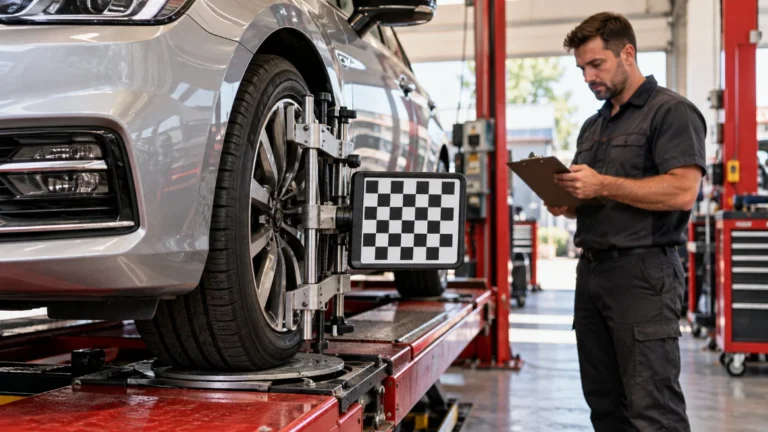


Not sure if your car needs servicing at 10,000 or 15,000 km, or every 6 or 12 months? Learn how Australian service intervals really work.
That little argument trips up a lot of drivers. Maybe you’ve only done 7,000 km since the last service, so another trip to the workshop feels early. Or you’ve knocked up 15,000 km in eight months and figured you can wait until the year is up.
The answer is usually simpler than it looks: your car follows its own manufacturer schedule, and that schedule commonly uses both time and distance.
There’s no single interval that suits every car. In Australia, plenty of vehicles run on schedules like 10,000 km or 12 months, 15,000 km or 12 months, or whatever the manufacturer sets. Where both a time and kilometre limit are listed, the service is generally due when whichever comes first.
Your car is running on two service clocks
Think of scheduled servicing as two clocks ticking at the same time. One tracks how far the car has travelled. The other just tracks time.
The distance clock
If your car hits its kilometre interval first, it can be due even if the last service was only a few months ago.
The calendar clock
If the time limit arrives first, low kilometres don’t automatically mean you can skip the service.
So is it 10,000 km or 15,000 km?
Both can be right. So can a completely different number.
Service intervals change with make, model, year, engine and sometimes how the car is used. Even vehicles from the same brand can have different schedules. That’s why copying the interval from a mate’s car, even one that looks similar, can point you the wrong way.
Often paired with a time limit such as 12 months.
Another common interval, again often paired with time.
Turbo, diesel, hybrid and EV schedules can differ by model and component.
For a real example of why generic numbers are risky, Hyundai Australia currently lists different routine intervals across parts of its range, including 10,000 km and 15,000 km schedules depending on the vehicle. Toyota’s Australian service calculator also works out the next interval from the specific vehicle rather than one universal number.
“But I barely drive.” Can a low-kilometre car still be due?
Yes. Picture a schedule that says 15,000 km or 12 months, whichever comes first.
Last service
Your car is serviced at 48,000 km.
Twelve months later
The odometer only shows 55,000 km. You’ve done 7,000 km, well short of the 15,000 km distance limit.
Still due
If your manufacturer sets 12 months as the other limit, the calendar has reached the service point first.
That’s one reason “I haven’t driven much” isn’t enough on its own to decide whether to push a scheduled service back. Some maintenance items are time-based, and the manufacturer has already built that into the schedule.
The opposite can happen too: high kilometres can bring the service forward
Now flip it. You cover long distances for work and hit the kilometre interval in eight months. You generally don’t wait another four months just because the calendar hasn’t reached a year yet.
The kilometre clock got there first.
Are you a “severe use” driver without realising it?
The phrase sounds like it belongs to mining trucks and outback tracks. In owner manuals, though, severe or demanding driving can cover surprisingly ordinary use.
Depending on the manufacturer and model, conditions that may call for different maintenance can include:
Hyundai’s Australian owner-manual guidance, for example, lists repeated short trips, heavy traffic, towing and stop-and-go driving among conditions that can mean more frequent maintenance on relevant models.
That does not mean every Sydney commute automatically halves your service interval. It means your driving pattern matters, and your own vehicle’s handbook is where you check what the manufacturer actually requires.
What actually changes from one service to the next?
A scheduled service isn’t always the same job repeated forever. What’s inspected, replaced or adjusted can shift as the car moves through its maintenance schedule.
| Service point | What it can mean |
|---|---|
| Routine interval | Engine oil and filter on many combustion vehicles, plus scheduled checks and inspections required for that particular car. |
| Larger interval | Additional filters, fluids, spark plugs or other maintenance items may become due depending on the manufacturer schedule. |
| Time-based item | Some fluids or components may have a time limit even when the vehicle has travelled relatively few kilometres. |
| EV or hybrid schedule | There may be fewer traditional engine-service items, but inspections, brakes, fluids, cooling systems and other scheduled maintenance still matter. |
This is also why two logbook-service quotes can look different if the workshops aren’t quoting the same scheduled items. Servistar’s guide to why logbook service prices vary explains what to compare before choosing on price alone.
How to find your exact service interval
You don’t need to become a maintenance expert. You just need the right vehicle information.
Check the logbook, service booklet or owner information
Look for the maintenance schedule that matches your exact model, engine and model year. Pay attention to both months and kilometres.
Check the manufacturer’s Australian information
Many manufacturers provide service schedules, owner manuals or service calculators online. Use Australian information where possible because schedules can differ between markets.
Confirm what was done last time
A stamp saying “serviced” is useful, but an invoice or service record tells you a lot more. Check the date, odometer reading and work completed.
Then compare the correct service
Once you know what interval you’re at, compare like with like. A cheaper quote isn’t really cheaper if it leaves out something your car is actually due for.
What if your service is already overdue?
Don’t panic, and don’t try to “catch up” by guessing what the car needs.
Start with the service history and current odometer reading. Then tell the workshop when the last service was done, what was carried out, and anything you know about missed maintenance. That gives the technician a much better starting point than simply saying, “It’s overdue.”
If the car also has a warning light, unusual noise, overheating, braking issue or another active symptom, mention that separately. A scheduled service isn’t automatically a diagnosis for every fault.
One question worth asking before you approve the booking
Instead of asking only:
“How much is a service?”
ask:
“What is actually due at this service interval for my car, and what does your quote include?”
That one question makes it easier to compare workshops fairly. If you’re unsure how to read a quote, the Servistar guide on comparing mechanic quotes walks through parts, labour, diagnosis and inclusions without the workshop jargon.
Frequently asked questions
How often should I service my car in Australia?
Follow the manufacturer schedule for your exact vehicle. Many cars use a time-and-distance interval, such as a set number of kilometres or months, with the service due when whichever limit comes first. The actual numbers vary by vehicle.
Should I service my car every 6 months or 12 months?
Neither interval is universal. Some vehicles or driving conditions can call for six-month attention, while many vehicles have 12-month routine schedules. Check the handbook or manufacturer information for your exact model.
Do I need a service if I have not reached the kilometres?
You may. If your schedule says a kilometre limit or a time limit, whichever comes first, reaching the time limit can make the service due even with low kilometres.
Can I wait until 15,000 km if my car says 10,000 km?
You should follow the interval specified for your vehicle rather than a generic number. A 15,000 km schedule used by another model doesn’t override a 10,000 km schedule for yours.
Does an electric car still need scheduled servicing?
Yes. EV maintenance is different from servicing a petrol or diesel engine, but manufacturers still specify inspections and maintenance for items such as brakes, tyres, fluids, cooling systems and other vehicle components.
- Hyundai Australia — servicing FAQs and scheduled intervals
- Hyundai Australian owner manual — normal vs severe usage conditions
- Toyota Australia — vehicle-specific service pricing and interval calculator
This article is general information for Australian drivers. Always check the maintenance requirements for your exact vehicle and driving conditions.
Know what your car is due for before you compare the price.
Enter your vehicle and location details with Servistar to explore suitable service options, compare workshop information and book online when you find the right fit.
Check Service Options → Clearer service details. Trusted local workshops. No guesswork.That little argument trips up a lot of drivers. Maybe you’ve only done 7,000 km since the last service, so another trip to the workshop feels early. Or you’ve knocked up 15,000 km in eight months and figured you can wait until the year is up.
The answer is usually simpler than it looks: your car follows its own manufacturer schedule, and that schedule commonly uses both time and distance.
There’s no single interval that suits every car. In Australia, plenty of vehicles run on schedules like 10,000 km or 12 months, 15,000 km or 12 months, or whatever the manufacturer sets. Where both a time and kilometre limit are listed, the service is generally due when whichever comes first.
Your car is running on two service clocks
Think of scheduled servicing as two clocks ticking at the same time. One tracks how far the car has travelled. The other just tracks time.
The distance clock
If your car hits its kilometre interval first, it can be due even if the last service was only a few months ago.
The calendar clock
If the time limit arrives first, low kilometres don’t automatically mean you can skip the service.
So is it 10,000 km or 15,000 km?
Both can be right. So can a completely different number.
Service intervals change with make, model, year, engine and sometimes how the car is used. Even vehicles from the same brand can have different schedules. That’s why copying the interval from a mate’s car, even one that looks similar, can point you the wrong way.
Often paired with a time limit such as 12 months.
Another common interval, again often paired with time.
Turbo, diesel, hybrid and EV schedules can differ by model and component.
For a real example of why generic numbers are risky, Hyundai Australia currently lists different routine intervals across parts of its range, including 10,000 km and 15,000 km schedules depending on the vehicle. Toyota’s Australian service calculator also works out the next interval from the specific vehicle rather than one universal number.
“But I barely drive.” Can a low-kilometre car still be due?
Yes. Picture a schedule that says 15,000 km or 12 months, whichever comes first.
Last service
Your car is serviced at 48,000 km.
Twelve months later
The odometer only shows 55,000 km. You’ve done 7,000 km, well short of the 15,000 km distance limit.
Still due
If your manufacturer sets 12 months as the other limit, the calendar has reached the service point first.
That’s one reason “I haven’t driven much” isn’t enough on its own to decide whether to push a scheduled service back. Some maintenance items are time-based, and the manufacturer has already built that into the schedule.
The opposite can happen too: high kilometres can bring the service forward
Now flip it. You cover long distances for work and hit the kilometre interval in eight months. You generally don’t wait another four months just because the calendar hasn’t reached a year yet.
The kilometre clock got there first.
Are you a “severe use” driver without realising it?
The phrase sounds like it belongs to mining trucks and outback tracks. In owner manuals, though, severe or demanding driving can cover surprisingly ordinary use.
Depending on the manufacturer and model, conditions that may call for different maintenance can include:
Hyundai’s Australian owner-manual guidance, for example, lists repeated short trips, heavy traffic, towing and stop-and-go driving among conditions that can mean more frequent maintenance on relevant models.
That does not mean every Sydney commute automatically halves your service interval. It means your driving pattern matters, and your own vehicle’s handbook is where you check what the manufacturer actually requires.
What actually changes from one service to the next?
A scheduled service isn’t always the same job repeated forever. What’s inspected, replaced or adjusted can shift as the car moves through its maintenance schedule.
| Service point | What it can mean |
|---|---|
| Routine interval | Engine oil and filter on many combustion vehicles, plus scheduled checks and inspections required for that particular car. |
| Larger interval | Additional filters, fluids, spark plugs or other maintenance items may become due depending on the manufacturer schedule. |
| Time-based item | Some fluids or components may have a time limit even when the vehicle has travelled relatively few kilometres. |
| EV or hybrid schedule | There may be fewer traditional engine-service items, but inspections, brakes, fluids, cooling systems and other scheduled maintenance still matter. |
This is also why two logbook-service quotes can look different if the workshops aren’t quoting the same scheduled items. Servistar’s guide to why logbook service prices vary explains what to compare before choosing on price alone.
How to find your exact service interval
You don’t need to become a maintenance expert. You just need the right vehicle information.
Check the logbook, service booklet or owner information
Look for the maintenance schedule that matches your exact model, engine and model year. Pay attention to both months and kilometres.
Check the manufacturer’s Australian information
Many manufacturers provide service schedules, owner manuals or service calculators online. Use Australian information where possible because schedules can differ between markets.
Confirm what was done last time
A stamp saying “serviced” is useful, but an invoice or service record tells you a lot more. Check the date, odometer reading and work completed.
Then compare the correct service
Once you know what interval you’re at, compare like with like. A cheaper quote isn’t really cheaper if it leaves out something your car is actually due for.
What if your service is already overdue?
Don’t panic, and don’t try to “catch up” by guessing what the car needs.
Start with the service history and current odometer reading. Then tell the workshop when the last service was done, what was carried out, and anything you know about missed maintenance. That gives the technician a much better starting point than simply saying, “It’s overdue.”
If the car also has a warning light, unusual noise, overheating, braking issue or another active symptom, mention that separately. A scheduled service isn’t automatically a diagnosis for every fault.
One question worth asking before you approve the booking
Instead of asking only:
“How much is a service?”
ask:
“What is actually due at this service interval for my car, and what does your quote include?”
That one question makes it easier to compare workshops fairly. If you’re unsure how to read a quote, the Servistar guide on comparing mechanic quotes walks through parts, labour, diagnosis and inclusions without the workshop jargon.
Frequently asked questions
How often should I service my car in Australia?
Follow the manufacturer schedule for your exact vehicle. Many cars use a time-and-distance interval, such as a set number of kilometres or months, with the service due when whichever limit comes first. The actual numbers vary by vehicle.
Should I service my car every 6 months or 12 months?
Neither interval is universal. Some vehicles or driving conditions can call for six-month attention, while many vehicles have 12-month routine schedules. Check the handbook or manufacturer information for your exact model.
Do I need a service if I have not reached the kilometres?
You may. If your schedule says a kilometre limit or a time limit, whichever comes first, reaching the time limit can make the service due even with low kilometres.
Can I wait until 15,000 km if my car says 10,000 km?
You should follow the interval specified for your vehicle rather than a generic number. A 15,000 km schedule used by another model doesn’t override a 10,000 km schedule for yours.
Does an electric car still need scheduled servicing?
Yes. EV maintenance is different from servicing a petrol or diesel engine, but manufacturers still specify inspections and maintenance for items such as brakes, tyres, fluids, cooling systems and other vehicle components.
- Hyundai Australia — servicing FAQs and scheduled intervals
- Hyundai Australian owner manual — normal vs severe usage conditions
- Toyota Australia — vehicle-specific service pricing and interval calculator
This article is general information for Australian drivers. Always check the maintenance requirements for your exact vehicle and driving conditions.
Know what your car is due for before you compare the price.
Enter your vehicle and location details with Servistar to explore suitable service options, compare workshop information and book online when you find the right fit.
Check Service Options → Clearer service details. Trusted local workshops. No guesswork.