A burning smell can point to anything from overheated brakes or a slipping clutch to leaking oil or an electrical problem. Learn how the type of smell, when it appears and the other symptoms around it can help narrow down what needs checking.
You finish a normal drive, get out of the car and catch a hot smell. It might remind you of burnt rubber. It could be oily, electrical or strangely sweet. The car still drives fine, so the real question is harder: can you keep an eye on it, or should you stop driving?
A burning smell from a car is a symptom, not a diagnosis. Brakes can overheat, oil can drip onto a hot exhaust, and manual clutches can slip.
Belts or hoses can rub, electrical insulation can get too hot, and coolant can leak onto hot parts. The best clues are what the smell reminds you of, when it shows up and what else changed at the same time.
Start with the smell — but do not diagnose the car by smell alone
People describe smells differently, so you do not need the “right” label. Instead, treat your description as the first clue, then put it together with timing, warning lights, noises and any change in how the car drives.
Often points a workshop toward engine oil or another fluid reaching a hot surface. It can get stronger once the engine is fully warm or after the airflow stops when you park.
Could be a slipping belt, rubber touching something hot or rotating, an overheated brake, or another part creating friction.
Wiring, connectors, motors or aftermarket accessories may be overheating. A strong smell that gets worse, smoke or odd electrical behaviour raises the urgency.
Heavy braking can leave a temporary hot smell, but a dragging brake can stay hot during normal driving. Pulling, smoke, grinding or a change in pedal feel needs prompt inspection.
Coolant has a distinctive sweet smell. A leak can evaporate on hot parts without leaving a big puddle, so temperature warnings and coolant loss matter too.
When does the burning smell appear?
The last few minutes of driving often tell you more than the smell itself. For example, a smell that starts after a long descent points somewhere different from one that appears after a service, under acceleration or only when you stop at the lights.
Repeated stops or a long descent
The brakes may simply have been worked hard. If the smell also shows up during ordinary driving, a brake component may be dragging or not releasing properly. Note any pulling, vibration, grinding or change in pedal feel.
More obvious under load
On a manual car, clutch slip becomes more likely if the engine revs climb without matching road speed. Belt problems and fluid leaks can also stand out more when the engine is working harder.
Strongest when the car stops
Once the airflow drops, smells from oil, coolant or another fluid touching hot engine or exhaust parts become easier to notice around the cabin or the front of the car.
Started immediately after maintenance
A small amount of spilled oil or cleaner can sometimes burn off. But a smell that hangs around, gets stronger, produces smoke or appears with fluid loss should be reported to the workshop.
The smell enters through the vents
The HVAC system is not automatically the source. The fresh-air intake can pull engine-bay smells into the cabin, although blower motors, wiring and other HVAC parts can also overheat.
You notice it only after getting out
Heat soak and the loss of airflow can make a small oil or coolant leak easier to smell. Without touching hot parts, note whether the odour seems strongest near one wheel, the engine bay or the exhaust area.
Six common causes of a burning smell from a car
These are the main systems a mechanic is likely to check. They are not a parts shopping list. In fact, the same smell can come from more than one place, and the repair depends on what the inspection actually finds.
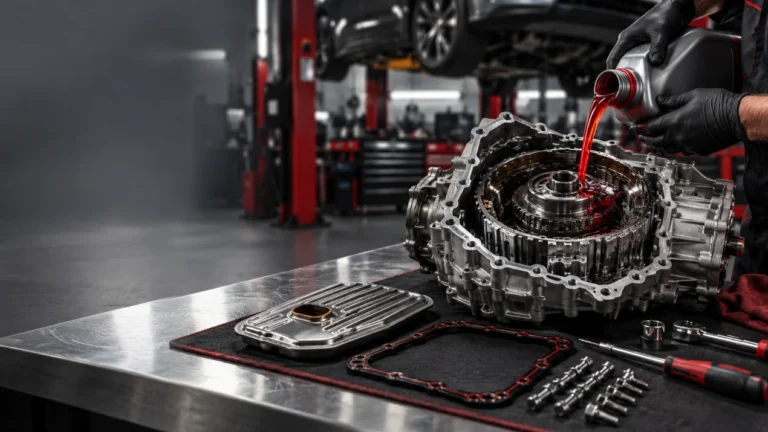
Oil or another fluid reaching a hot surface
A leaking gasket, seal, hose or connection can let fluid reach the exhaust or another hot component. The smell often appears once the vehicle is fully warm and can be strongest after you stop.
Overheated or dragging brakes
Repeated hard braking creates heat normally. A sticking caliper, parking-brake fault or another brake that does not release correctly can keep generating heat during normal driving.
A slipping manual clutch
Clutch slip creates heat at the friction surfaces. A useful clue is engine revs rising faster than road speed, especially uphill, under acceleration or in a higher gear.
A belt, hose or rubber component overheating
A drive belt can slip on a pulley, while a hose or other rubber part can contact something hot or moving. Squealing, visible wear, charging issues or loss of an accessory function may give extra clues.
Electrical wiring or a component overheating
Hot wiring insulation, connectors, motors, relays or accessories can smell like burnt plastic or electronics. Because electrical heat can become a fire risk, a strong electrical smell should not be ignored.
A cooling-system leak or overheating problem
Coolant leaking onto hot components can create a sweet heated smell. If the temperature gauge rises, a warning appears, there is steam or coolant keeps disappearing, the cause needs to be found rather than repeatedly topped up.
Follow the strongest symptom. If engine revs rise without matching acceleration, read Servistar’s clutch slipping guide.
If the smell comes with brake squeal, scraping or grinding, see the brake-noise guide. If temperature is climbing or coolant is disappearing, use the car overheating guide.
When should you stop driving because of a burning smell?
There is no reliable “another 20 km is fine” rule, because the smell alone does not tell you how serious the fault is. Therefore, use the other symptoms to decide how quickly to act.
Pull over somewhere safe and stop driving if you have:
- visible smoke, vapour or flames;
- a strong burning-plastic or electrical smell that is getting worse;
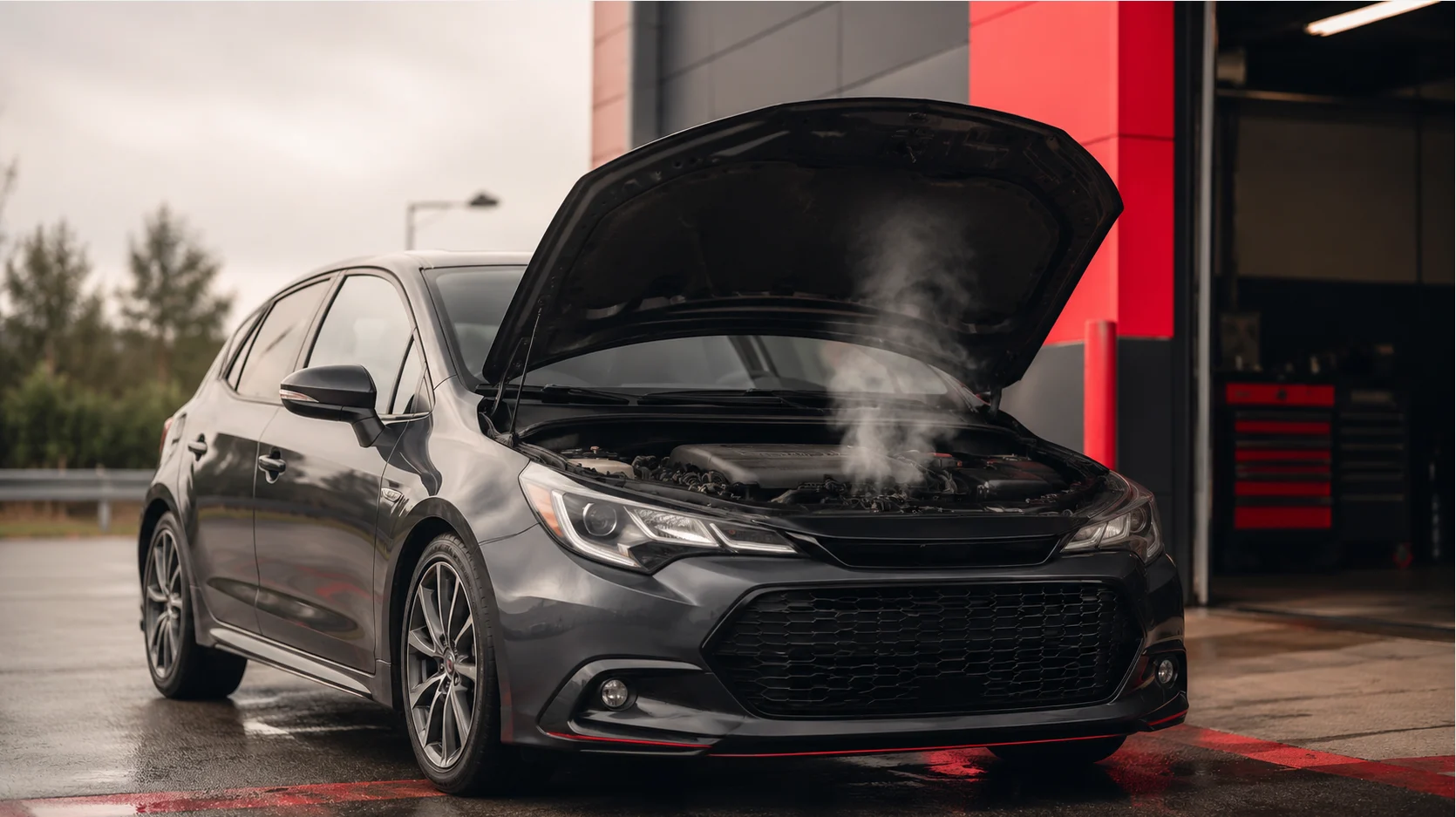
- an overheating warning, rising temperature gauge or steam;
- a major loss of braking, severe pulling or smoke from a wheel area;
- major power loss, a charging warning or electrical systems behaving abnormally;
- anything visibly leaking onto hot parts, melting or hanging loose after an impact.
Switch the vehicle off when it is safe to do so and keep people away from smoke or fumes. Should there be a vehicle fire or an immediate fire risk, move to a safe distance and call Triple Zero (000). Do not open the bonnet simply to investigate an active engine-bay fire.
If an electric or hybrid vehicle has unusual smoke or vapour, popping or hissing, or signs of a battery incident, keep clear of the vehicle and contact emergency services. High-voltage incidents need a different response from ordinary under-bonnet troubleshooting.
Safety reference: Fire and Rescue NSW advises people to keep clear of an EV involved in an incident and call Triple Zero (000). Read the FRNSW electric-vehicle guidance.
If a warning light appeared at the same time, photograph it only when safely stopped and check Servistar’s dashboard warning-light guide.
What can you safely check before booking a mechanic?
You can gather useful information without touching hot parts, removing covers or crawling under the car. However, if there is smoke, active leaking onto hot components or a possible fire, skip these checks and prioritise safety.
- Replay the last few minutes of driving. Heavy braking, slow traffic, a steep hill, hard acceleration, a recent repair or switching on an electrical accessory can all matter.
- Describe the smell in your own words. “Hot oil”, “burnt rubber”, “melting plastic”, “sweet”, or simply “I cannot identify it” is useful information.
- Work out where it seems strongest. Without touching anything hot, note whether it is more obvious near one wheel, at the front of the car, inside the cabin or after parking.
- Check the dashboard. Record any temperature, battery/charging, brake, engine or other warning once the car is safely stopped.
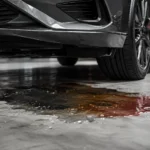
- Look for obvious fluid on the ground. A fresh puddle or new staining is useful. Never open a hot cooling system and do not reach into a hot or running engine bay.
- Notice any change in how the car drives. Pulling, a new squeal, loss of electrical functions, rising revs without acceleration or a change in braking can help narrow the inspection.
Start with the symptom. Describe when the smell happens and let the workshop confirm the cause before parts are quoted.
What should you tell the mechanic about a burning smell?
“My car smells burnt” is a useful start. Still, five extra details can make an intermittent fault much easier to reproduce and diagnose.
A useful booking note
“There is a hot rubber/electrical-type smell after about 20 minutes of driving. I notice it most when I stop at traffic lights. There is no smoke, but the battery light came on once yesterday. It started three days ago.”
- What does the smell remind you of?
- When does it start: cold, hot, braking, uphill, in traffic or after parking?
- Where is it strongest?
- Are there warning lights, smoke, leaks, noises or changes in performance?
- Was there a recent service, repair, battery replacement or accessory installation?
A workshop may then inspect for leaks, compare brake temperatures, check belt-drive components, test electrical circuits or reproduce the symptom under controlled conditions. The inspection path should follow the evidence rather than a pre-selected part.
| What you notice | Useful diagnostic direction | What not to assume |
|---|---|---|
| Burning oil smell after driving | Find the source of an external fluid leak and where it reaches a hot surface. | That the engine is necessarily burning oil internally. |
| Burnt rubber smell + squeal | Inspect the belt drive, pulleys and nearby components for slipping or rubbing. | That replacing the belt alone will definitely fix it. |
| Hot smell + pulling to one side | Check brake operation and whether one wheel is remaining abnormally hot. | That new brake pads alone are the answer. |
| Burning smell + clutch slip | Assess clutch engagement, actuation and related driveline components. | That the friction disc is the only possible fault. |
| Burning plastic + electrical symptoms | Trace the affected circuit or component and inspect for heat damage. | That replacing a blown fuse fixes the underlying cause. |
| Sweet smell + rising temperature | Inspect or pressure-test the cooling system as appropriate and find the leak or circulation fault. | That repeated coolant top-ups are a repair. |
Before approving a repair quote, make sure the cause was actually found
A burning-smell repair can range from a loose or leaking component to a larger brake, clutch, cooling or electrical job. That makes the total price hard to judge unless the quote explains what was diagnosed.
Before approving work, ask what caused the smell, how the workshop confirmed it, which parts and fluids are included, whether related damage was found, and whether diagnosis, labour and GST are included in the total.
If two workshops recommend different repairs, compare the scope before comparing the final number. Servistar’s guide to comparing mechanic quotes explains how to check whether two prices are actually covering the same work.
Common questions about a burning smell from a car
Why does my car smell like burning rubber?
A slipping belt, rubber touching a hot or rotating part, an overheated brake or another friction source are all possibilities. Squealing, smoke, pulling or loss of an accessory function helps narrow the inspection.
Why does my car smell like burning oil after driving?
An external oil leak can reach a hot engine or exhaust surface and become more noticeable once the car is fully warm or parked. Internal oil burning is a different issue, so the source still needs to be confirmed.
Why is there a burning smell when I accelerate?
Extra load creates more heat and may expose clutch slip, belt problems or a fluid leak. On a manual car, rising revs without matching acceleration is an important clue for clutch slip.
Can brakes cause a burning smell?
Yes. Hard braking creates heat, while a brake that is dragging can stay hot during ordinary driving. Pulling, smoke, grinding or changed braking behaviour makes the problem more urgent.
Why does my car smell like burning plastic?
Overheating wiring, connectors, motors or accessories are possible causes, as is plastic touching a hot component. A strong electrical smell with smoke or electrical faults should be treated cautiously.
Why do I smell something burning through the air vents?
The ventilation intake can draw odours from the engine bay, so the dashboard is not necessarily the source. Blower motors, wiring and other HVAC components can also overheat.
Can I keep driving if there is a burning smell but no smoke?
It depends on the pattern and other symptoms. A new smell that repeatedly returns should be inspected. Stop sooner if it becomes strong or is accompanied by warning lights, overheating, braking changes, electrical faults or power loss.
Describe the symptom first. Compare the repair after diagnosis.
A burning smell can come from several different systems. Tell the workshop what you noticed, when it happened and what changed at the same time. Servistar can help you explore repair options and available workshops without guessing which part needs replacing first.
General information for Australian drivers. Vehicle designs and fault patterns vary, and a physical inspection is required to confirm the source of a smell. For an active vehicle fire or immediate fire risk, move to a safe location and contact emergency services. Electric and hybrid vehicles require additional high-voltage safety precautions.