
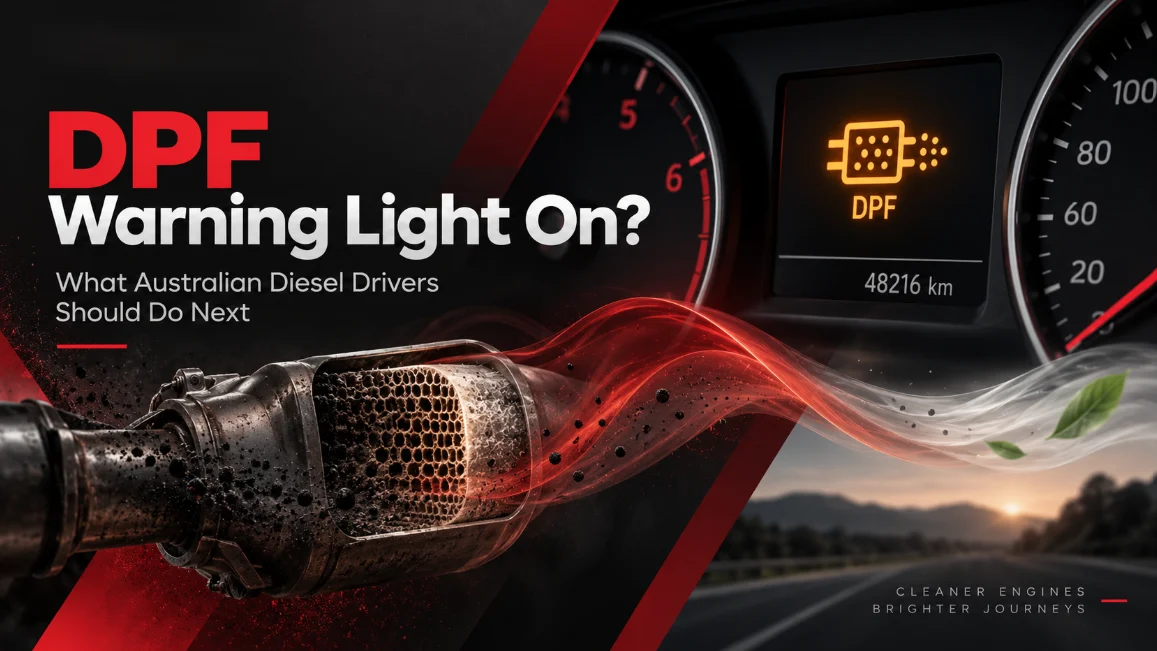
That little DPF light can mean the filter needs a chance to regenerate, but it can also point to a problem that driving alone will not fix. Here is how to respond without guessing, what makes a DPF block, and when it is time to have your diesel properly checked.
You start the car and notice a symbol on the dashboard that looks like a small filter filled with dots. The car still runs. Nothing sounds obviously wrong. So the natural question is, can I just keep driving?
Sometimes a DPF warning light is telling you that the diesel particulate filter has collected enough soot that it needs to complete a regeneration. Sometimes the light is there because that regeneration has not worked, or because another fault is stopping it from working properly.
The useful part is knowing the difference before a manageable warning becomes an expensive problem.
Quick answer: what should I do when the DPF light comes on?
Do not assume the filter needs replacing, and do not assume that a motorway drive will fix every DPF warning. Check the message on the dashboard and the regeneration instructions in your vehicle’s owner’s manual first. If your vehicle allows a driving regeneration, follow the manufacturer’s procedure.
If the light remains on, starts flashing, the car loses power, another warning appears, or the vehicle does not feel normal, arrange a proper diagnosis rather than repeatedly trying to clear the warning by driving.
First, what is a DPF actually doing?
A diesel particulate filter, usually shortened to DPF, sits in the exhaust system of many modern diesel vehicles. Its job is to capture particulate matter, including soot, rather than allowing as much of it to leave through the exhaust.
That creates an obvious problem. A filter cannot keep collecting soot forever.
So the vehicle periodically raises the conditions inside the exhaust system enough to oxidise much of the trapped soot. This process is called DPF regeneration.
In everyday driving, you may never notice regeneration happening. The engine management system can handle much of the process automatically when the operating conditions are right.
The warning light becomes important when the system is telling you that soot loading has risen, regeneration has not completed as expected, or the vehicle has detected a problem related to the system.
So what does the DPF warning light actually mean?
This is where internet advice often becomes too confident.
A DPF light does not have exactly the same meaning, colour or required response on every diesel vehicle. One manufacturer may use a steady warning to request a regeneration drive. Another vehicle may display a written message. A flashing light can carry a different level of urgency again.
Your owner’s manual is therefore more useful than a generic instruction telling every diesel driver to drive at a certain speed for a certain number of minutes.
Read the dashboard message and check the vehicle specific regeneration instructions. The filter may be asking for conditions that allow regeneration to complete.
If you have followed the manufacturer’s procedure and the warning remains, the car may need diagnosis rather than another attempt at the same drive.
Treat a flashing warning more seriously. Check the manual and arrange professional advice promptly because the required response varies by vehicle.
The vehicle may have limited performance to protect the engine or emissions system. Do not keep trying to force the car to drive normally. Arrange diagnosis.
An engine, oil pressure, temperature or other serious warning changes the situation. Respond to the most urgent warning and stop safely when required.
Why can short trips cause DPF trouble?
Think about a diesel that spends most of its week doing ten minute trips through suburban traffic.
The engine starts cold. You drive a few kilometres. Traffic slows everything down. Then the engine is switched off shortly after arriving.
That pattern can make it harder for some DPF systems to reach or maintain the conditions needed to complete regeneration.
The engine and exhaust spend less time fully warmed.
The vehicle may not get the conditions it needs to finish the process.
The filter has less available capacity as soot loading increases.
The car may eventually ask the driver to take action.
This is one reason DPF problems can show up in vehicles that otherwise seem well maintained. The driver may not be doing anything obviously wrong. The way the car is being used simply may not be giving the emissions system many opportunities to complete its normal cycle.
That does not mean every city driven diesel will develop a blocked DPF. It also does not mean short trips are the only possible cause. They are one part of the picture.
Can I clear a DPF warning light by going for a drive?
Possibly, but only when that is the procedure specified for your vehicle and the car is otherwise safe to drive.
Many DPF equipped vehicles can complete regeneration during sustained driving when the exhaust reaches suitable operating conditions. This is why drivers are often told that a longer, steady drive can help.
The problem is that this advice gets repeated online as though it were a universal reset button.
It is not.
The required engine speed, road speed, journey length, gear selection and other conditions can differ between vehicles. A DPF warning can also be caused or complicated by a fault that no amount of highway driving will repair.
Regeneration opportunity
The filter contains soot, the rest of the system is operating correctly, and the vehicle is asking for the driving conditions required to complete regeneration.
Underlying fault
A sensor, engine or emissions problem is preventing successful regeneration. Driving farther does not repair the actual fault.
If the owner’s manual instructs you to complete a regeneration drive, follow those instructions. If the warning does not clear after the correct procedure, that is useful information. It is time to find out why.
Why does my DPF light keep coming back?
A warning that clears and then repeatedly returns deserves more attention than simply repeating the same regeneration drive every few days.
The DPF itself might be heavily loaded, but the filter can also be the place where another problem becomes visible.
Possible contributors can include incorrect readings from pressure or temperature sensors, engine operating problems that produce excessive soot, issues affecting exhaust temperature, unsuccessful regenerations, or a filter that has accumulated material that normal regeneration cannot remove.
This is why replacing or cleaning the DPF before checking the rest of the system can become expensive guesswork.
DPF regeneration, cleaning and replacement are not the same thing
These three terms are often treated as though they describe increasingly expensive versions of the same job. They actually solve different problems.
Regeneration is part of the normal operation of a DPF. Heat is used to oxidise accumulated soot so the filter can continue doing its job. Depending on the vehicle and the situation, this may occur automatically, during a manufacturer specified driving procedure, or through a workshop initiated process.
Professional cleaning may be considered when the filter contains contamination or accumulated material that normal regeneration cannot adequately deal with. The correct method depends on the filter and its condition. Diagnosis should come first so the cause of the problem is not simply sent back into a cleaned filter.
A DPF may need replacement if it is damaged, no longer serviceable, or cannot be restored appropriately. A warning light by itself is not proof that replacement is required.
There is also a difference between soot and ash
Soot is the material the regeneration process is designed to oxidise. Ash is different. Non combustible material gradually remains inside the filter over its working life.
That distinction matters because a filter with a soot loading problem may respond to successful regeneration, while a filter with significant ash accumulation needs a different approach.
So when someone says, “Your DPF is full,” the next useful question is, full of what, and how was that determined?
What should a mechanic check before condemning the DPF?
A proper diagnosis should look beyond the dashboard symbol.
The exact procedure depends on the vehicle, but useful information may include diagnostic fault codes, soot loading data, differential pressure readings, temperature sensor information, regeneration history and whether another engine or emissions fault is present.
The technician may also need to consider how the vehicle has been driven, whether it has repeatedly attempted regeneration, whether the correct engine oil has been used, and whether the engine is producing more soot than it should.
Useful questions to ask the workshop
You do not need to know the technical answer before asking these. The point is simply to understand what has actually been diagnosed.
That final question is often the most important.
If the filter became overloaded because something else is wrong with the vehicle, dealing with the filter without dealing with the cause can leave you facing the same warning again.
When should you stop trying to clear the light yourself?
A DPF warning does not automatically mean you need roadside assistance. There is still a point where experimenting stops being useful.
Arrange professional help if the situation is getting worse
If the vehicle has significantly reduced power, the DPF warning is flashing, the warning remains after the correct manufacturer procedure, other serious dashboard warnings appear, the engine is running badly, or the car no longer feels safe to drive, stop relying on repeated regeneration attempts and have the vehicle assessed.
Also remember that a dashboard symbol identifies a system, not necessarily the failed component. It is a starting point for diagnosis.
Can you reduce the chance of another blocked DPF?
You cannot prevent every DPF fault, but a few habits can make life easier for the system.
Use the correct engine oil
Use the oil specification required by the manufacturer. The emissions system and engine have been designed around particular lubricant requirements, so choosing oil based only on viscosity or price is not a good shortcut.
Do not ignore a regeneration request
If your vehicle tells you that a regeneration procedure is required, deal with it when it is safe and practical rather than waiting for the warning to become more serious.
Pay attention to how the diesel is actually being used
If nearly every trip is extremely short and slow, it is worth understanding how your particular vehicle handles DPF regeneration. Some diesels are much happier when they regularly reach normal operating temperature for a sustained period.
Fix engine problems instead of treating only the filter
If the engine is producing excessive soot or the emissions system cannot complete regeneration correctly, repeatedly cleaning the DPF is unlikely to be a satisfying long term solution.
Keep servicing up to date
A good service history gives the engine and emissions system the best chance to operate as designed. It also gives a technician useful context if a DPF problem later appears.
What does DPF repair or cleaning cost in Australia?
There is no single useful price for a “DPF repair” because the phrase can describe very different jobs.
One vehicle may only need diagnosis and a successful regeneration. Another may need a faulty sensor repaired. A heavily contaminated filter may require professional cleaning. A damaged filter may need replacement. Access, vehicle design and the reason the DPF became restricted can all change the labour and parts involved.
So instead of asking only, “How much is DPF cleaning?”, ask what the quote actually includes.
Before comparing DPF quotes, check the scope
A cheaper quote is not necessarily worse, and a more expensive quote is not necessarily more thorough. What matters is whether you are comparing the same diagnosis and the same work.
Frequently asked questions about DPF warning lights
Can I drive with the DPF warning light on?
It depends on the vehicle, the type of warning and whether any other symptoms are present. Check the dashboard message and your owner’s manual. Some vehicles may request a regeneration drive. If the light is flashing, the car has lost power, another serious warning appears, or the vehicle is not running normally, arrange professional advice rather than continuing to drive as usual.
Will a long drive clear a blocked DPF?
A suitable drive can help some vehicles complete DPF regeneration when soot loading is the problem and the system is otherwise working correctly. It will not repair a failed sensor, engine fault, damaged filter or every other cause of a DPF warning. Follow the procedure specified for your vehicle rather than relying on a universal speed or time found online.
How long does DPF regeneration take?
There is no single regeneration time that applies to every diesel vehicle. The process and required conditions vary by manufacturer, model and system. Follow your owner’s manual if the vehicle requests driver action.
Why does my DPF light keep coming back?
Repeated warnings can mean the filter is loading with soot again, regeneration is not completing, or another engine or emissions fault is contributing to the problem. If the warning repeatedly returns, diagnosis is more useful than continually trying to clear the light.
Does a DPF warning mean I need a new filter?
No. The warning tells you the system needs attention, but it does not prove the DPF itself needs replacement. Depending on the cause and filter condition, the answer could involve regeneration, diagnosis, cleaning, repair of another component or replacement.
What is the difference between DPF regeneration and DPF cleaning?
Regeneration is the process used to oxidise accumulated soot inside the filter. Professional cleaning is a separate service that may be required when regeneration cannot adequately restore the filter or when other accumulated material needs to be removed.
Can city driving cause DPF problems?
Frequent short trips and slow traffic can make it harder for some diesel vehicles to achieve the operating conditions needed for regeneration. Driving pattern is not the only cause of DPF trouble, but it is an important factor to consider.
Can I clean a DPF myself with an additive?
A bottle of cleaner should not replace diagnosis when a warning light is present. Products, vehicle requirements and DPF systems differ. Before adding anything, check whether the product is suitable for your exact vehicle and whether the warning is actually being caused by soot loading rather than another fault.
DPF light still on?
You do not need to decide for yourself whether the car needs regeneration, cleaning, a sensor or a new DPF. Start by describing what the vehicle is doing and what warning you can see. A workshop can then diagnose the cause before you commit to the repair.
With Servistar, you can explore suitable service and repair options and make a more informed decision before booking.
Compare service and repair optionsThis article provides general information for Australian drivers. DPF warning symbols, regeneration procedures and safe driving instructions differ between manufacturers and models. Always follow the information provided for your specific vehicle, particularly when dashboard warnings or reduced engine performance are present.