

Car suddenly using more fuel? Learn what causes high fuel consumption, what you can check yourself, and when to book a mechanic in Sydney.
You know roughly how long a tank normally lasts. So when the fuel light starts coming on two or three days earlier than usual, you notice.
Maybe your driving hasn’t changed. Same commute, same places, filling up around the same time each week. Yet the car still seems to be drinking more.
A small shift in fuel economy isn’t always a problem. Sydney traffic, short trips, extra weight, tyre pressure, or even a different route can all make a difference.
But if fuel use has jumped suddenly, especially when something else feels off at the same time, it’s worth taking a closer look.
First, is your car really using more fuel?
Dashboard fuel-economy figures are handy, but they jump around. A week of short trips or stop-start traffic can make the number look a lot worse without anything mechanical being wrong.
For a clearer picture, track fuel use across a few normal fill-ups instead of relying on one dashboard reading.
- Record the odometer or reset your trip meter when you fill up.
- Drive normally. Don’t suddenly change how you drive.
- At the next fill, note the litres added and kilometres travelled.
- Do this over two or three tanks rather than judging one trip.
Fuel consumption in Australia is usually shown as litres per 100 kilometres (L/100km). The lower the number, the less fuel the car is using.
Official fuel-consumption numbers come from standardised testing. Real-world use is often different because of traffic, temperature, how you drive, load, terrain and plenty of other factors.
Why is my car using more fuel?
There’s no single answer.
Fuel economy depends on how easily the car rolls, how efficiently the engine is running, and how much work the vehicle has to do. Sometimes the reason is straightforward. Other times, higher fuel use is just one clue among several that points to a mechanical issue.
Here are some of the most common places to start looking.
Low tyre pressure
Underinflated tyres create more rolling resistance. Put simply, the engine has to work harder to keep the car moving.
Check the recommended tyre pressures for your vehicle. You’ll usually find them on a placard inside the driver’s door or in the owner’s manual.
Don’t just inflate the tyres to the maximum pressure printed on the sidewall. That’s not the same as the manufacturer’s recommended operating pressure for your car.
Wheel alignment or tyre problems
If the wheels aren’t properly aligned, the tyres may not roll as freely as they should.
You might also notice the car pulling to one side, an off-centre steering wheel, or uneven tyre wear.
If the change started after hitting a pothole or kerb, it’s worth having the tyres, wheels and alignment checked rather than assuming the extra fuel use is an engine problem.
More stop-start driving than usual
Fuel economy tends to suffer when the car spends more time accelerating, slowing down and idling.
This is especially relevant if your usual drive has become more congested, you’ve changed jobs, school runs have been added, or you’re simply doing more short suburban trips.
A change in driving pattern can easily look like a mechanical problem when you’re only comparing how quickly the fuel gauge drops each week.
Extra weight or aerodynamic drag
Extra weight means the engine has more work to do.
Roof racks, roof boxes, bike carriers and other external gear can also increase aerodynamic drag, especially at higher speeds.
You don’t need to empty the glovebox for the sake of fuel economy. But if you’ve been carrying heavy tools, sporting gear, or leaving an unused roof rack fitted for months, it may be adding up.
Engine or sensor problems
Modern engines constantly adjust how they run using information from several sensors.
If one of those sensors is sending inaccurate data, the engine may not run as efficiently as it should. Depending on the vehicle, oxygen sensors, airflow sensors and engine-temperature readings can all affect how fuel delivery is managed.
That doesn’t mean an oxygen sensor should automatically be replaced just because fuel economy has dropped.
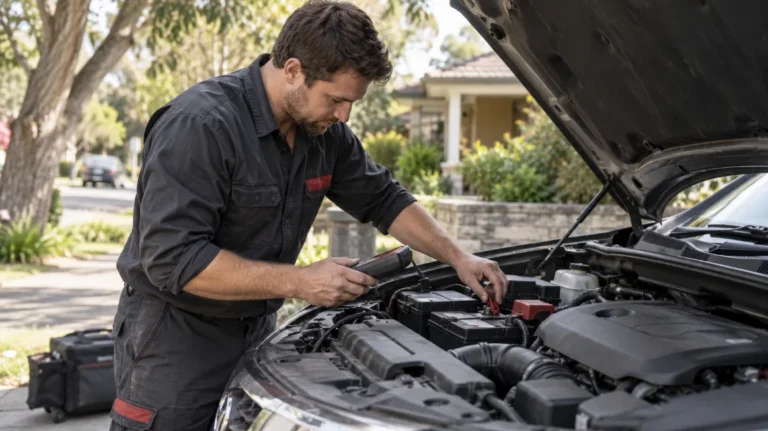
Proper diagnosis matters. A mechanic may need to scan the vehicle, check fault codes and look at live operating data before pinning the blame on a specific part.
Ignition or combustion problems
Worn spark plugs, ignition faults or an engine that’s misfiring can reduce efficiency.
You may also notice rough running, hesitation, a lack of power or a check-engine light.
If the car feels different as well as using more fuel, tell the mechanic about both. That combination is much more useful than fuel consumption alone.
Overdue maintenance
Cars don’t suddenly become inefficient the day a service reminder appears, but neglected maintenance can gradually affect how well a vehicle runs.
Spark plugs, air filters, engine oil and other service items can influence performance depending on the vehicle and its condition.
The sensible approach is to follow the manufacturer’s maintenance schedule rather than replacing random parts because a generic fuel-saving list told you to.
If you’re unsure what should actually be included at your next service, read our guide to logbook service costs in Sydney .
Dragging brakes or extra rolling resistance
A brake that isn’t releasing properly can create resistance while the vehicle is moving.
Depending on the fault, you may notice the car pulling, a hot smell, unusual wheel heat or poorer performance.
Don’t touch a wheel, disc or brake assembly to test its temperature. Braking components can get extremely hot.
Fuel-system problems
Injector faults, incorrect fuel delivery or other fuel-system issues can affect both performance and consumption.
A strong fuel smell, visible leak or fuel appearing under the vehicle is different from simply getting poor fuel economy.
If you suspect an active fuel leak, avoid driving the car and arrange professional help.
When using more fuel can be normal
Not every increase in fuel consumption means your car needs a repair.
Fuel use can temporarily rise when:
- you’re making more short trips
- traffic has become heavier
- you’re carrying more passengers or cargo
- you’re towing
- air conditioning is working harder
- you’ve fitted a roof rack, roof box or other external accessory
- your route now includes more hills
- you’re accelerating harder or travelling at higher speeds
Diesel vehicles can also show temporary changes during certain operating conditions, including diesel particulate filter regeneration on vehicles fitted with a DPF.
The useful question isn’t simply:
“Is my fuel-consumption number higher?”
A better question is:
“Has it changed without a reasonable explanation?”
What can I check myself?
Before booking the car in, a few simple checks can help rule out the obvious things.
| What to check | What you’re looking for |
|---|---|
| Tyre pressure | Compare all tyres with the manufacturer’s recommended cold pressures. |
| Tyre wear | Look for obvious uneven wear, damage or a tyre that appears low. |
| Driving pattern | Think about whether you’re doing more traffic-heavy or short-distance driving than before. |
| Vehicle load | Remove unnecessary heavy items or unused external racks if practical. |
| Warning lights | Check whether the engine or another warning light has appeared. |
| Service history | Check whether scheduled maintenance is overdue. |
| Other symptoms | Notice rough idle, hesitation, smoke, unusual smells, vibration or loss of power. |
If the change is recent, write down roughly when you first noticed it. A clear timeline can help a mechanic separate a long-term efficiency issue from a sudden fault.
When should I book a mechanic?
If your fuel consumption has changed a bit but the car feels completely normal, start by checking tyre pressure and monitoring consumption over the next few fill-ups.
A mechanical inspection becomes more worthwhile when the increase is persistent, significant, or comes with another change in how the vehicle behaves.
- a check-engine or other warning light
- rough idle or engine misfiring
- hesitation or noticeable loss of power
- a strong fuel smell
- visible smoke that isn’t normal for the vehicle
- the vehicle pulling or feeling unusually resistant
- unexplained overheating or temperature changes
- a sudden, substantial increase in fuel consumption
If you’re also seeing the temperature gauge climb, don’t treat it as a fuel-economy issue alone. Read our guide to what to do when your car is overheating .
And if the extra fuel use appeared around the same time as a new vibration at road speed, our guide to why a car shakes at high speed covers some of the tyre, wheel and mechanical issues worth checking.
What will a mechanic actually check?
That depends on the symptoms and the vehicle.
A good diagnosis shouldn’t start with randomly replacing parts.
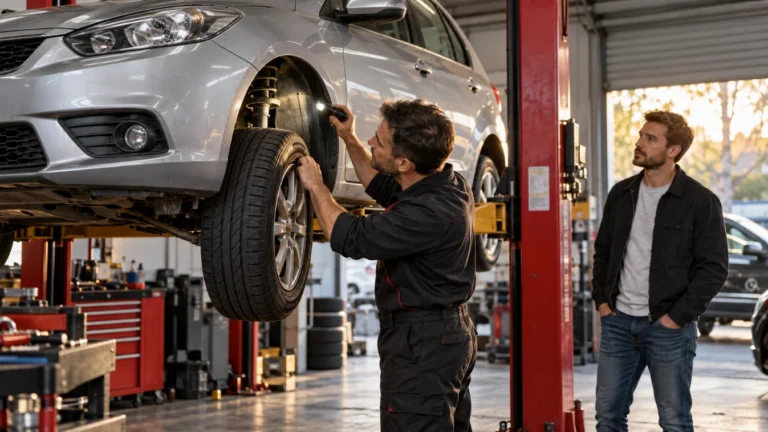
The mechanic may begin with simple checks such as tyre condition and pressure, then move into areas such as:
- diagnostic fault codes
- live engine and sensor data
- air-fuel mixture and fuel-trim readings
- spark plugs and ignition performance
- air intake and filter condition
- engine operating temperature
- brake drag
- tyre and wheel condition
- wheel alignment where the symptoms point in that direction
- fuel-system operation
That’s why “my car is using too much fuel” is useful information for a mechanic, but it isn’t a diagnosis by itself.
Tell them when the change started, roughly how much the fuel consumption has changed, and whether you’ve noticed anything else.
Those details can make the diagnostic process much more efficient.
How to improve fuel economy without chasing gimmicks
You don’t need unusual driving tricks, mystery additives or a boot full of fuel-saving gadgets to give your car the best chance of running efficiently.
Most of the useful steps are fairly ordinary:
- keep the tyres at the correct pressure
- accelerate smoothly where traffic conditions allow
- avoid carrying unnecessary heavy loads
- remove unused roof racks or external carriers
- combine short trips where practical
- keep scheduled servicing up to date
- use the fuel grade recommended for your vehicle
If your vehicle is designed to run on regular unleaded, simply buying a more expensive fuel doesn’t guarantee better fuel economy. Follow the minimum fuel requirement specified by the manufacturer.
Still using more fuel than usual?
If you’ve checked the basics and something still doesn’t feel right, Servistar can help you compare car-service options and connect with trusted local mechanics. Explain the symptoms, compare your options and book with more confidence.
Find a MechanicFrequently asked questions
Why is my car suddenly using more fuel?
A sudden increase can come from something simple, such as low tyre pressure, heavier traffic or more short trips. It can also be linked to alignment, ignition, sensor, fuel-system or other mechanical problems. Look for other symptoms and compare consumption over several normal trips before drawing conclusions.
Can low tyre pressure increase fuel consumption?
Yes. Underinflated tyres increase rolling resistance, which means the vehicle needs more energy to move. Check pressures when the tyres are cold and use the manufacturer’s recommended figures for your vehicle.
Can a car service improve fuel economy?
It can if poor fuel economy is related to overdue maintenance or a fault discovered during the service. Regular maintenance also helps keep the vehicle operating as intended. A service won’t necessarily transform fuel economy if the real cause is traffic, driving style or another unrelated issue.
Does wheel alignment affect fuel economy?
Poor alignment can increase rolling resistance and tyre wear. If the car pulls to one side, the steering wheel sits off-centre or your tyres are wearing unevenly, an alignment check may be worthwhile.
Can an oxygen sensor cause high fuel consumption?
A faulty oxygen sensor can affect the information the engine computer uses to manage the air-fuel mixture on some vehicles. But poor fuel economy alone doesn’t prove the sensor is faulty. Diagnostic testing should come before replacing it.
Should I use premium petrol to get better fuel economy?
Use the fuel grade specified by your vehicle manufacturer. A higher-octane fuel isn’t automatically more economical in a vehicle that doesn’t require it.
How do I know if high fuel consumption is serious?
Pay more attention when the increase is sudden or large, or when it comes with symptoms such as a warning light, rough running, loss of power, smoke, a fuel smell, overheating or unusual resistance while driving. Those signs are a good reason to arrange an inspection.