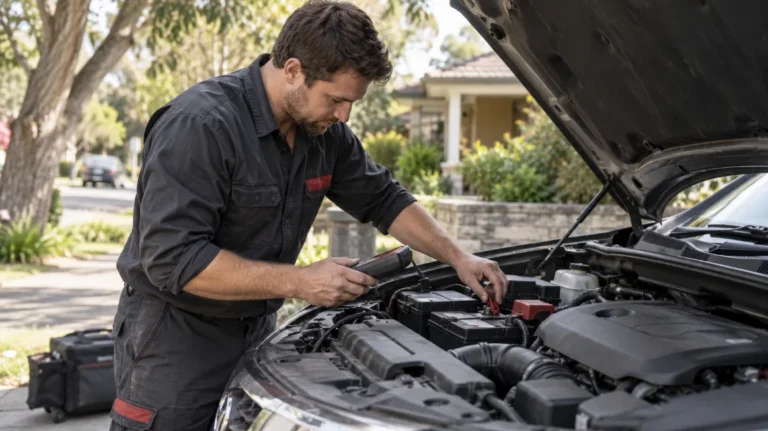


Living on Sydney’s Northern Beaches? Learn how salt air, short trips and beachside parking affect cars, plus what to check at your next service.
Living on Sydney’s Northern Beaches is hard to beat. Ocean just down the road, weekends that start with a swim, and even a regular drive through Manly, Freshwater, Dee Why or Narrabeen comes with a view. Your car, though, gets a slightly different version of the coastal lifestyle.
If you’ve ever looked up a car service on the Northern Beaches, you’ll notice local mechanics talk about things that don’t come up as much elsewhere in Sydney. Beachside parking, salt air, short local trips, stop-start traffic, and the extra wear that comes with living near the coast.
That doesn’t mean your car is doomed to rust or suddenly fall apart. Modern vehicles handle a wide range of conditions pretty well.
But where and how you drive does change which parts deserve a bit more attention when it’s time for a service.
If your car lives somewhere between Manly and Palm Beach, these seven things are worth keeping an eye on.
Why Northern Beaches driving can be a little different
A car parked near Freshwater Beach isn’t living the same life as one that spends every night in a dry underground garage further inland. And a car doing five-minute trips around Dee Why isn’t dealing with the same conditions as one regularly covering long highway stretches.
It’s rarely one big dramatic thing.
It’s the build-up of smaller ones: moisture, salt in the coastal air, sand, short journeys, traffic, hills, and plenty of everyday stop-start driving.
Salt air and moisture can encourage corrosion
If you regularly park close to the ocean, your car is in a different environment from one that spends most of its time well inland.
Salt carried in the coastal air settles on exposed metal. Add moisture and time, and areas underneath the vehicle can become more prone to surface corrosion, especially parts that don’t have the same paint protection as the body panels you can see.
Worth a closer look: parts of the exhaust, brackets, fasteners, brake hardware and other exposed underbody components.
Short trips aren’t always as easy on a car as they feel
A five-minute run to the shops feels gentle. Mechanically, though, lots of short journeys can be harder on a car than one longer drive.
The engine often spends most of the trip warming up rather than running at its normal temperature.
The battery also has less driving time to recover the energy used when you start the car.
Think about a typical week: home to school, school to the shops, a quick trip to the beach, back home, then another short run later.
None of those drives is tough on its own. Together, they’re a very different pattern from a 40-minute motorway commute.
If you’ve also noticed your car using more fuel than usual , frequent short trips and stop-start driving are worth considering before assuming something major has gone wrong.
Hills and stop-start traffic give the brakes plenty to do
Northern Beaches driving isn’t flat and free-flowing.
Between local hills, roundabouts, traffic lights and congestion on roads like Pittwater Road and Barrenjoey Road, the brakes work harder than the odometer might suggest, even if your yearly kilometres aren’t that high.
That doesn’t automatically mean your pads will wear out faster than usual.
Vehicle weight, driving style, brake design and the kind of trips you make all play a part. But local conditions are one more reason not to judge brake health only by the distance travelled.
If you’re already comparing repair options, you can also read Servistar’s guide to brake pad replacement in Sydney .
Your battery may not love a life of short drives
Batteries usually only get attention on the morning the car refuses to start.
The problem often builds more quietly than that.
Starting the engine uses a decent amount of electrical energy, and the charging system needs driving time to put it back.
If your car spends most of the week on short local trips, or sits unused for a few days at a time, battery condition is worth watching more closely.
Age, temperature, the car’s electronics and the charging system all play a role too.
Slower-than-normal cranking, repeated clicking, or needing a jump-start are signs that testing makes more sense than just hoping it sorts itself out.
If the car is already refusing to start, see 10 things to check when your car won’t start .
Sand has an impressive ability to get everywhere
Anyone who regularly brings kids, boards, towels or half the beach home in the car already knows this one.
Most of the sand you see is just an interior-cleaning issue. Filters, though, work quietly in the background to keep unwanted material out of the air entering the engine and cabin.
A dirty cabin filter can reduce airflow through the ventilation system.
An engine air filter that gets heavily contaminated can affect airflow too.
Filters are normal service items, so they don’t need replacing just because you live near the beach.
They should be checked and changed when their condition or the manufacturer’s schedule says so.
Tyres and suspension still deserve attention between services
Tyres don’t care whether you’re heading to Palm Beach or Parramatta.
They care about pressure, alignment, load, road surface and how they’re driven.
Local life can mean frequent kerbs, roundabouts, parking manoeuvres, speed humps and a lot of urban driving.
That’s why a quick look at the tyres every few weeks is worthwhile.
Check for uneven wear, sidewall damage and obviously low pressure.
Persistent steering pull, a new vibration, or a steering wheel that no longer sits straight can also be reasons to have the alignment and suspension checked.
Traffic and hot weather can reveal cooling-system problems
Sydney summer eventually shows up, and crawling traffic gives the cooling system a different job from steady open-road driving.
Your cooling system is designed to handle normal traffic.
A healthy car shouldn’t overheat just because Pittwater Road is busy.
But if a cooling-system component is already on the way out (a leak, weak pressure cap, fan issue or similar), slow traffic and hot weather is often when the problem becomes obvious.
Never ignore a rising temperature gauge, overheating warning, coolant smell or visible coolant leak.
What should a Northern Beaches car service actually check?
There’s no official “Northern Beaches service”.
The manufacturer’s service schedule is still the foundation.
If you’re wondering what routine servicing should cost, see our guide to logbook service costs in Sydney .
What changes is the conversation you have with the mechanic about how the car is actually used.
When you’re booking a car service on the Northern Beaches, it’s useful to mention if the vehicle spends most of its time near the ocean, does mainly short journeys, sits unused for long stretches, or regularly deals with heavy traffic.
Your driving pattern matters more than your postcode
Two neighbours in Dee Why can own the same model car and still need quite different attention.
| Your usual driving | What may deserve extra attention | Why |
|---|---|---|
| Mostly short local trips | Battery, engine oil, fuel use | The car spends more of its operating time warming up and has shorter charging periods. |
| Regular beachside parking | Underbody, brake hardware, exposed metal | Coastal moisture and salt exposure make visual inspection worthwhile. |
| Heavy daily traffic | Brakes, cooling system, fluids | Repeated braking and low-speed operation create a different workload from open-road driving. |
| Car sits unused for days | Battery and tyres | Low use can sometimes expose a weakening battery or slow pressure loss. |
| Longer regular commutes | Tyres, fluids, scheduled servicing | Distance adds up faster, so kilometre-based service intervals can arrive sooner. |
When should you book a mechanic instead of waiting?
Preventative maintenance is useful, but some symptoms are worth dealing with before the next scheduled service.
Get the car checked sooner if you notice:
- a red or persistent dashboard warning
- grinding or significant noise when braking
- the engine overheating
- a fluid leak under the vehicle
- slow starting or repeated battery problems
- new steering vibration or instability
- a strong burning or electrical smell
- a sudden and noticeable change in how the car drives
Workshop or mobile mechanic on the Northern Beaches?
This is another search Northern Beaches drivers make a lot, and the answer really depends on the job.
A mobile mechanic can be convenient when…
- the car won’t start at home
- you need battery testing or replacement
- you want routine servicing at your location
- a basic diagnostic assessment can be done on-site
- getting the car to a workshop is the biggest inconvenience
A workshop may make more sense when…
- the vehicle needs a hoist
- the repair requires larger equipment
- there is significant underbody work
- the diagnosis is complex
- multiple repairs or specialist procedures are required
The useful question isn’t “Is a mobile mechanic better?”
It’s: what does this particular problem need?
Finding a mechanic on Sydney’s Northern Beaches
Search for “mechanic Northern Beaches” and you’ll find plenty of options around Brookvale, Manly Vale, Dee Why, Warriewood, Mona Vale and the surrounding suburbs.
The harder part is deciding which option suits your vehicle, the work required and your budget.
Before booking, look past the headline price.
Check what the service includes, whether extra work needs your approval, where the mechanic is based, whether the job is suitable for mobile servicing, and whether you’re being given enough information to make a sensible call.
Buying rather than servicing a car? If you’re shopping locally, our Northern Beaches pre-purchase inspection guide explains what to check before buying a used car around Brookvale.
Need a car service on the Northern Beaches?
Servistar helps drivers compare service options and connect with local mechanics without spending the afternoon ringing workshops one by one.
Whether you’re in Manly, Brookvale, Dee Why, Narrabeen, Mona Vale or further up the peninsula, start with your car, your location and the service you actually need.
Compare Car Service OptionsFrequently asked questions
Does living near the beach damage your car?
Living near the coast doesn’t automatically damage a vehicle, but regular exposure to salty air and moisture can encourage corrosion on exposed metal over time.
Keeping the car clean and having vulnerable underbody components checked during servicing can help catch issues early.
How often should I service my car on the Northern Beaches?
Follow the service interval specified by your vehicle manufacturer. Your mechanic may suggest additional checks if the car faces demanding conditions, frequent short journeys, low use or other factors relevant to how it’s driven.
What should I ask a Northern Beaches mechanic to check?
On top of the manufacturer’s scheduled service items, tell the mechanic how the car is used.
If it spends a lot of time near the coast, ask about the condition of exposed underbody components, brakes, battery, tyres and filters.
Can salt air cause rust on a car?
Salt and moisture can contribute to corrosion where metal is exposed. Modern vehicles have extensive corrosion protection, so this doesn’t mean every coastal car will develop serious rust.
Condition, age, storage, cleaning and exposure all make a difference.
Is a mobile mechanic available on the Northern Beaches?
Mobile mechanics operate across many Northern Beaches suburbs and can handle a range of servicing, battery, diagnostic and repair work at a home or workplace.
Some jobs still need a workshop, hoist or specialist equipment, so suitability depends on the fault and the vehicle.
Is a mobile mechanic more convenient than a workshop?
It can be, especially when the car won’t start or you don’t have time to organise a workshop drop-off.
For larger or more complex repairs, a traditional workshop is often the more practical option.
Where can I find car servicing around Manly, Dee Why or Brookvale?
Northern Beaches drivers have workshop and mobile-mechanic options across areas including Manly Vale, Brookvale, Dee Why, Freshwater, Narrabeen, Warriewood, Mona Vale, Newport and Avalon.
Comparing what’s actually included in the service, rather than choosing only by distance, helps you find an option that better suits the job.
The Northern Beaches lifestyle isn’t bad for your car. It just gives it its own particular routine.
Beachside parking, short local trips, hills and busy roads don’t mean something is about to fail.
They simply give you a few extra clues about what deserves attention.
Stick to the manufacturer’s service schedule, listen when your car starts behaving differently, and tell your mechanic how the vehicle is actually used.
A little context can make a routine car service a lot more useful, whether your driveway is in Manly Vale, Dee Why, Narrabeen, Mona Vale or somewhere overlooking the water further north.