
Own an LDV T60 or G10 in Australia? See where rust can appear, what to check, and what to do if you find signs of corrosion.
Spotted a bit of orange under your LDV and not sure if it’s just surface rust or something you should actually deal with?
If you’re driving a T60 or G10, it’s worth taking a closer look. Corrosion issues on certain T60 and G10 models have been talked about enough in Australia that both the ACCC and LDV Australia have publicly addressed them.
That doesn’t mean every T60 or G10 is rotting away. It just means knowing where to check, and what to do if you find something, is genuinely useful.
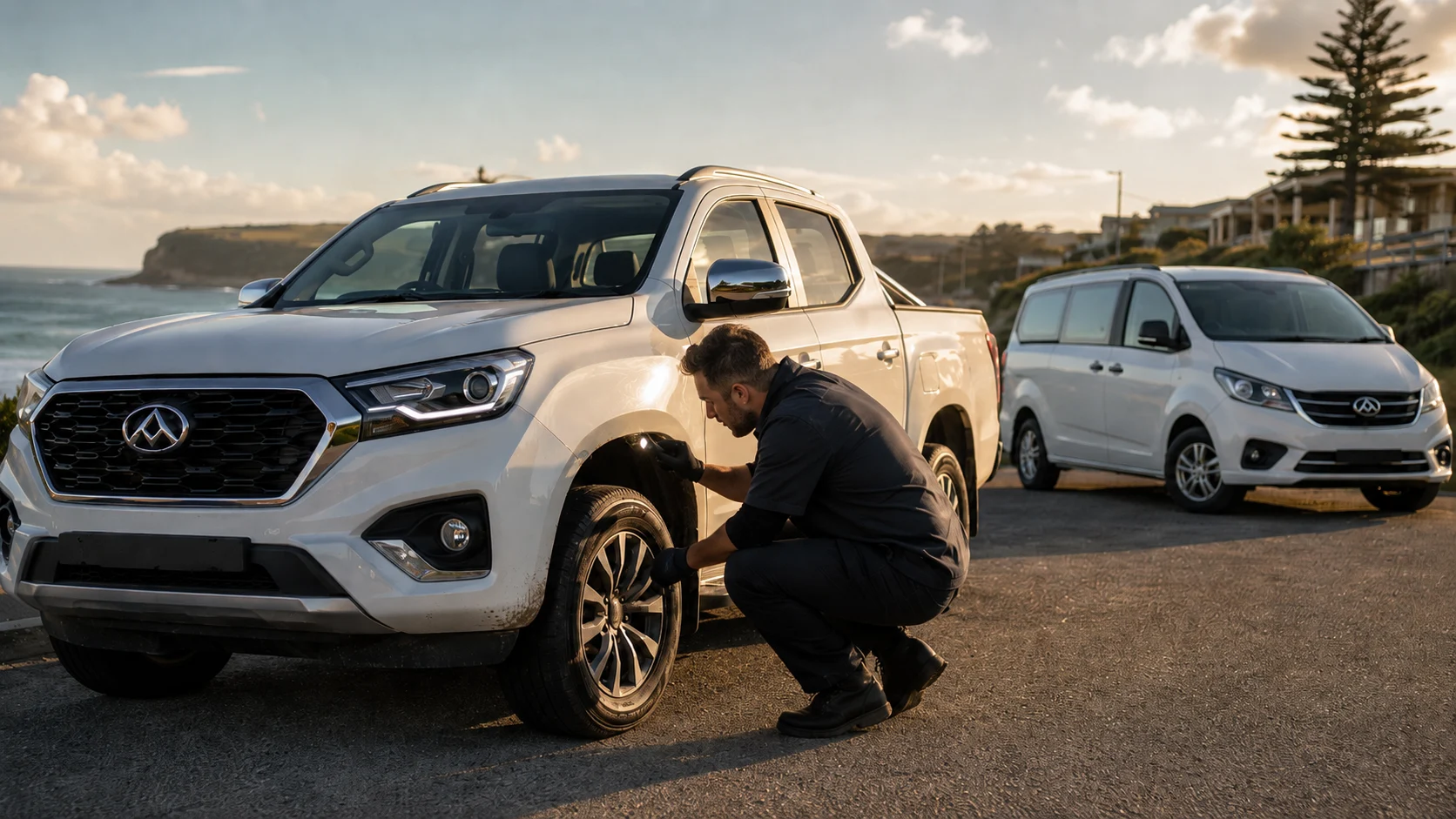
Have a look at the underbody, chassis and crossmembers, wheel-arch areas, seams, brackets, exposed hardware and anywhere moisture or dirt tends to sit. If you see bubbling paint, orange staining, flaky metal or corrosion in a few different spots, take photos before you clean anything and get it properly inspected.
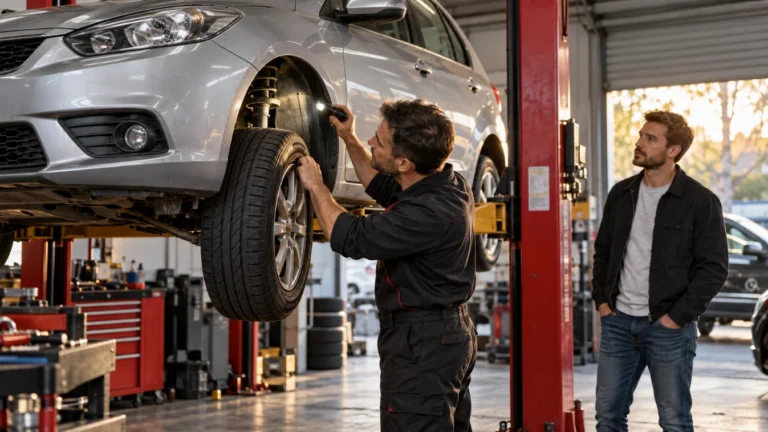
Look underneath
The bits you don’t see every day usually tell you more than the paintwork does.
Take photos
Document what you find before cleaning, treating or covering anything.
Get it checked
Surface rust and more developed corrosion are not the same thing.
So, what’s actually happening with LDV rust?
First things first: this isn’t just forum chatter.
In April 2025 the Australian Competition and Consumer Commission started Federal Court proceedings against Ateco Automotive (trading as LDV Automotive Australia). The ACCC alleges that certain T60 and G10 models had a tendency to develop rust or corrosion within five years of manufacture.
The case covers vehicles with T60 and G10 in their model names. The eT60 is excluded from the ACCC’s claim.
These are still allegations in front of the Federal Court, so they’re not findings against LDV.
LDV Australia has its own dedicated T60 and G10 owner-support page. It acknowledges that corrosion concerns may affect certain vehicles and sets out a process for owners who want their vehicle assessed.
Why coastal drivers should pay extra attention
If your T60 or G10 lives around Manly, Brookvale, Dee Why, Narrabeen or anywhere else near the coast, this probably hits a bit closer to home.
Salt, moisture and bare metal have never been friends. The ACCC’s case also alleges that the risk of corrosion was higher when these vehicles were used in or near the kinds of environments shown in LDV advertising: beaches and areas around water.
That doesn’t mean parking near the beach automatically ruins the car. Age, condition, coatings, how often it’s cleaned, where it’s stored and any previous damage all play a part.
Still, it’s another good reason to actually look underneath instead of assuming everything’s fine just because the paint still looks tidy.
We covered what beachside parking, salty air and Northern Beaches driving really do to a car in our Northern Beaches car-care guide . If your LDV spends a lot of time near the ocean, the two topics go hand in hand.
Start here: six places worth checking
You don’t need to strip the car in the driveway. Start with what you can safely see and leave anything that needs the vehicle up on a hoist to a proper workshop.
Underbody and chassis areas
Look for orange staining, widespread surface rust, flaking, or spots that look clearly different from the metal around them.
Crossmembers, brackets and mounting points
These collect road grime and moisture. They’re much easier to check properly when the vehicle is on a hoist.
Wheel arches
Road spray, mud and dirt hit these constantly. Check the edges, seams and any visible metal behind the wheel.
Lower doors and sills
Look along the edges and seams for bubbling paint, staining or anything starting to push up under the finish.
Rear body and tailgate areas
Check the joins, lower edges, fasteners and anywhere water or dirt tends to hang around after a wash or wet-weather driving.
Paint chips and damaged coatings
Even a small exposed patch can be enough for corrosion to get started. Keep an eye on stone chips, scratches and damaged protective coating.
What does early rust actually look like?
A lot of people miss early corrosion because they’re waiting for something dramatic. The early signs are often pretty ordinary.
- Orange or brown staining around bolts, joins or seams
- Paint starting to bubble or lift
- A rough texture showing up on exposed metal
- Flaking or scaling underneath the vehicle
- Rust appearing in several separate places
- Corrosion around brackets, mounts or hardware
- An area that looks like it’s spreading between checks
One small patch doesn’t automatically mean you’ve got a major structural problem. At the same time, a car can look fine from standing height while corrosion is quietly developing underneath.
So the real question isn’t just “Is there rust?”
It’s more useful to ask: where is it, how far has it gone, and is it getting worse?
If you find rust, do this before anything else
The first instinct is usually to grab a wire brush, rust converter or the pressure washer and clean it all up.
If you think your T60 or G10 might need assessing, document the condition first.
Take clear photos
Get some wider shots that show where the corrosion is, then closer ones that show the condition of the metal.
Note the date
A simple dated record makes it easier to see whether the affected area is changing or spreading over time.
Keep your vehicle details handy
Have the VIN, registration, purchase details and service history ready if you contact LDV or a workshop.
Don’t cover it before assessment
If you’re planning to have it inspected, avoid putting a coating over it that makes the original condition hard to see.
Independent mechanic or LDV dealer?
A lot depends on what you’re trying to achieve.
| If you want to… | A sensible next step |
|---|---|
| Understand what you’re seeing underneath the car | A qualified workshop can inspect the visible corrosion and help you understand the condition of the affected parts. |
| Check a used T60 or G10 before buying it | Arrange a pre-purchase inspection that includes the underbody and corrosion condition. |
| Seek an assessment through LDV Australia | Follow LDV’s T60/G10 support process. LDV says its corrosion assessment has to be done through an authorised LDV dealership. |
| Work out whether an issue is urgent | Have the vehicle professionally inspected rather than trying to judge severity from a photo alone. |
Important: an independent mechanical inspection and an official LDV corrosion assessment are not the same thing. If you’re going down the LDV route, follow LDV Australia’s current assessment process.
Buying a used T60 or G10? Don’t skip the underside
A clean bonnet and a freshly detailed interior tell you almost nothing about what’s happening underneath.
If you’re looking at a used LDV T60 or G10, corrosion deserves a spot on the pre-purchase checklist, especially if the vehicle has spent years near the coast, done a lot of off-road work, or has an unclear history.
- Ask to see the vehicle from underneath if it can be done safely
- Look around the wheel arches, seams and lower body edges
- Watch for fresh underbody coating that might be hiding the original surface
- Ask where the vehicle has mainly been stored and driven
- Go through the service and repair records
- Ask whether corrosion has been assessed or repaired before
- Get an independent inspection before you commit if anything feels off
We’ve covered the wider buying process in our Northern Beaches pre-purchase inspection guide .
Can you stop corrosion from getting worse?
It depends on why the corrosion started and how far it’s already gone, but everyday care still makes a difference.
Clean off salt and mud
Pay particular attention to the underbody and wheel-arch areas after beach, coastal, muddy or wet driving.
Deal with damaged paint
Don’t leave chips or scratches that expose bare metal for months on end.
Keep drain areas clear
Dirt and debris can trap moisture in places you really don’t want it sitting.
Actually look underneath
When the vehicle is already on a hoist for a service, ask for a quick visual corrosion check.
The goal isn’t to obsess over every orange mark under the car. It’s just to catch a developing problem while you still have options.
LDV rust questions owners are asking
Do LDV T60s have rust problems?
Corrosion concerns have been reported on certain LDV T60 vehicles. The ACCC has started Federal Court proceedings alleging rust and corrosion issues in relevant T60 and G10 models, and LDV Australia has set up a support process for concerned owners. That doesn’t mean every T60 is affected.
Does the LDV G10 have the same corrosion issue?
G10 models are also included in the ACCC proceedings and in LDV Australia’s current T60 and G10 corrosion support information. Each vehicle still needs to be assessed on its own.
Is the LDV eT60 included?
The ACCC states that the eT60 is excluded from the T60 vehicles covered by its current claim.
Does surface rust mean my LDV is unsafe?
Not necessarily. Rust varies a lot in location and severity. What looks minor in one spot can be mostly cosmetic, while corrosion on another component might need closer attention. A professional inspection is the better way to work out what you’re dealing with.
Should I clean the rust before contacting LDV?
If you’re concerned enough to seek an assessment, document the condition with clear photos before you clean, treat or coat the affected area.
Can my normal mechanic inspect LDV corrosion?
A qualified mechanic can inspect visible corrosion and the condition of the vehicle’s components. But LDV says vehicles going through its corrosion assessment process need to be assessed at an authorised LDV dealership.
I bought my LDV privately. Can I still contact LDV?
Yes. LDV Australia says privately purchased vehicles can still be submitted for assessment. Owners should provide the vehicle details and proof of purchase where available.
Should I check for rust before buying a used LDV T60?
Yes. The underbody and visible metal condition should be part of any sensible pre-purchase inspection, especially if the vehicle has spent a lot of time outdoors, near the coast or in harsh conditions.
The bottom line
If you own a T60 or G10, there’s no need to panic, and no good reason to ignore obvious corrosion either.
Spend a few minutes looking in the places that usually get ignored. If you find something, photograph it. If it looks widespread, is getting worse, or sits around important underbody components, get someone qualified to take a proper look.
And if you want the vehicle assessed through LDV’s own corrosion-support process, contact LDV Australia and follow its current authorised-dealer procedure.
Rust is a lot easier to deal with when you know it’s there.
Want someone to take a proper look?
Servistar helps Australian drivers compare car service and inspection options and connect with local mechanics, without ringing workshop after workshop.
Tell us what you’ve noticed, where you are and what vehicle you drive, then see the options available for your car.
Get a Service QuoteOfficial information
For the latest information about the LDV corrosion matter and owner-assessment process, refer directly to: